
SEND THE DETAILS
Share a nameplate photo, the location, and whatever you know about your equipment. No testing is required from you.
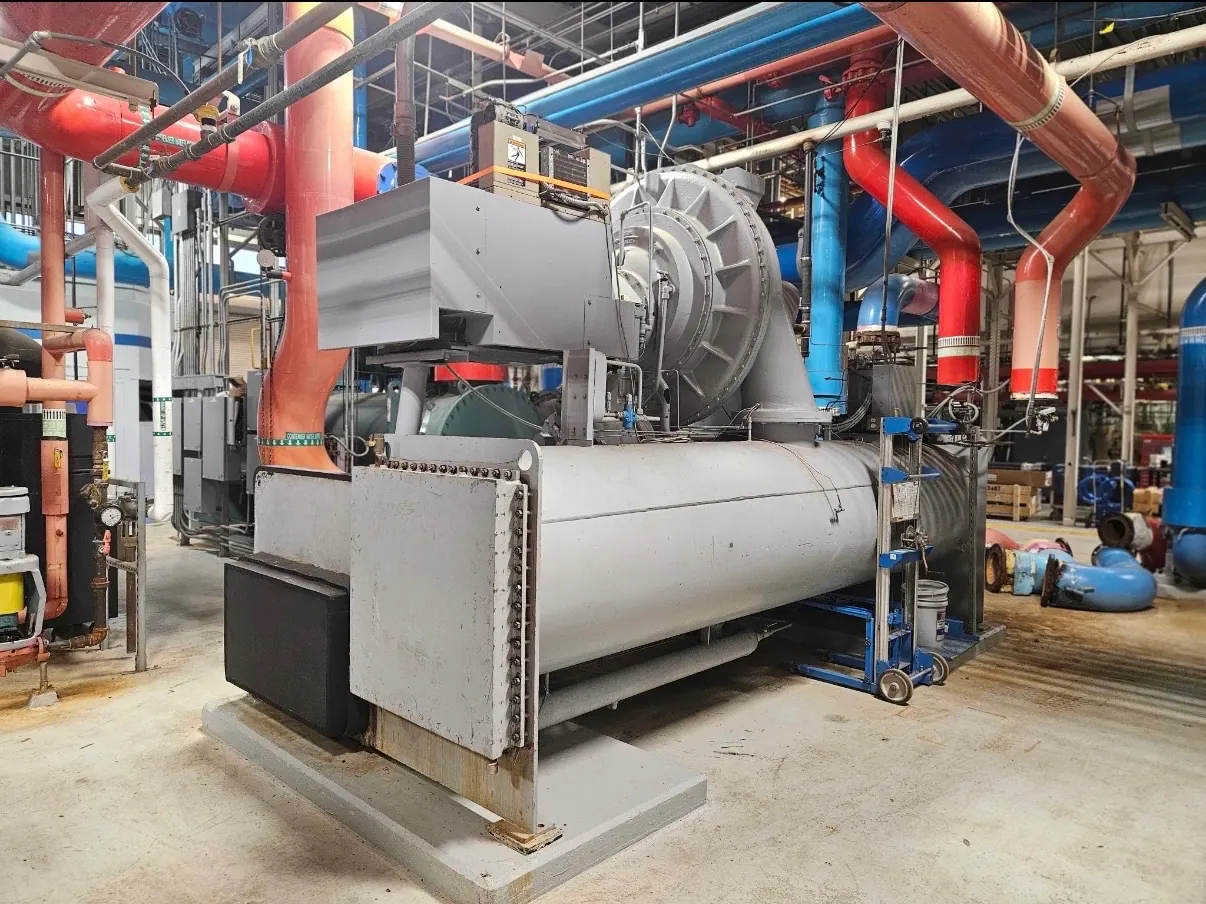
We buy Carrier chillers in Lubbock, Texas, with cash offers and upfront payment when a purchase is agreed. We handle removal, and the seller does not need to test the equipment.
From first photo to final haul, we take care of the details so you can move forward.
Share a nameplate photo, the location, and whatever you know about your equipment. No testing is required from you.
We review the chiller and your site information, then make an offer. Payment is upfront.
We handle disconnects, refrigerant recovery, crane and rigging, loading, freight and hauling.
For a Carrier chiller in Lubbock, the name on the cabinet is only a starting point. A realistic cash offer depends on the machine’s identifiable components, known condition, what is included in the sale, and the work required to remove it from its present location. We buy used industrial and commercial chillers, including Carrier equipment, but each asset and project is reviewed individually; an offer or purchase is not guaranteed.
Capacity helps describe the chiller, but cooling tons measure output, not the unit’s weight or lifting requirements. A nameplate, overall photographs, and any available compressor or control labels help establish what is being considered. If the plate is unreadable, records are incomplete, or the machine’s operating history is unknown, share that plainly. You do not need to run or repair the equipment to begin a review.
Make a simple inventory of the chiller and any components offered with it, such as separate pumps, panels, or loose parts. Note which items belong to the facility and are not for sale. If the equipment has been idle, partly dismantled, or moved into storage, mention that too. Photographs can document visible damage or missing pieces without requiring anyone to open a refrigerant circuit.
Current refrigerant charge and internal condition may not be known from a photograph or old service paperwork. Do not vent refrigerant or open the circuit to find out. Provide whatever records are already available, and leave uncertain details identified as uncertain; the review can account for what remains to be confirmed safely.
A chiller’s location can affect removal planning as much as its size. Describe whether it is indoors, outdoors, elevated, or behind other equipment, and show the practical route from its position to a loading area. Useful details include door and corridor restrictions, overhead obstructions, stairs, gates, turning room, and whether other plant equipment must remain in service.
For an elevated or rooftop unit, the lift and staging areas need to be assessed at the actual property. If known, share the building level, available access, nearby obstructions, and where a crane or transport vehicle might be permitted to stand. Ground support, clearances, weather, site rules, and the approved work area can affect the method. No particular lifting arrangement should be assumed before those conditions are reviewed.
Tell us what remains connected and which utilities or neighboring equipment must stay available. The authorized site contact can explain isolation boundaries, access approvals, safety procedures, and any scheduling limits. This helps establish a removal sequence that fits the property rather than treating a connected machine as if it were already ready to load.
If the chiller is part of a plant replacement or renovation, identify the outgoing unit and the expected handoff window. Explain whether contractors will be working nearby and which parts of the facility remain active. Timing and access can be coordinated around the real project; the seller is not expected to disconnect, recover, rig, or transport the chiller independently.
If a purchase is agreed, we coordinate appropriate refrigerant recovery with qualified personnel, along with equipment disconnects, rigging, crane work when needed, loading, freight, and hauling. The right scope depends on the actual unit and site conditions. The seller should not vent refrigerant or open the circuit, and does not need to arrange a separate recovery crew or hire a hauler for our removal work.
Work is coordinated with the authorized site contact, who supplies accurate information, approved access, applicable site rules, and necessary approvals. If conditions differ from the information provided—for example, the route is blocked or a machine is still connected differently than expected—the scope and sequence may need to be reviewed before work proceeds.
Payment terms are discussed as part of the asset and project review. If both sides agree to a purchase, payment is made upfront before pickup, under the agreed terms. That does not mean every Carrier chiller will receive an offer: the decision depends on the equipment and removal scope, and no cash amount can be promised before review.
To start, send the available nameplate information, a few clear photographs, a short description of condition and included components, and an account of the access route. Include the unit’s location on the property and a contact authorized to discuss site conditions. Gaps in the information are fine to identify; you do not need to test, restart, clean, repair, or prepare the chiller for removal just to request a review.

Air-cooled or water-cooled. Centrifugal, screw or scroll. From single units to large shutdown projects, we buy industrial chillers across Texas.
Send us your chiller details and nameplate photos for a cash offer. Don’t worry if you don’t know every specification—we can start with what you have.
Call or text(614) 715-3047TEXT NAMEPLATE PHOTOS ↗Prefer email?
saleselectricalbuyers@gmail.com