
SEND THE DETAILS
Share a nameplate photo, the location, and whatever you know about your equipment. No testing is required from you.
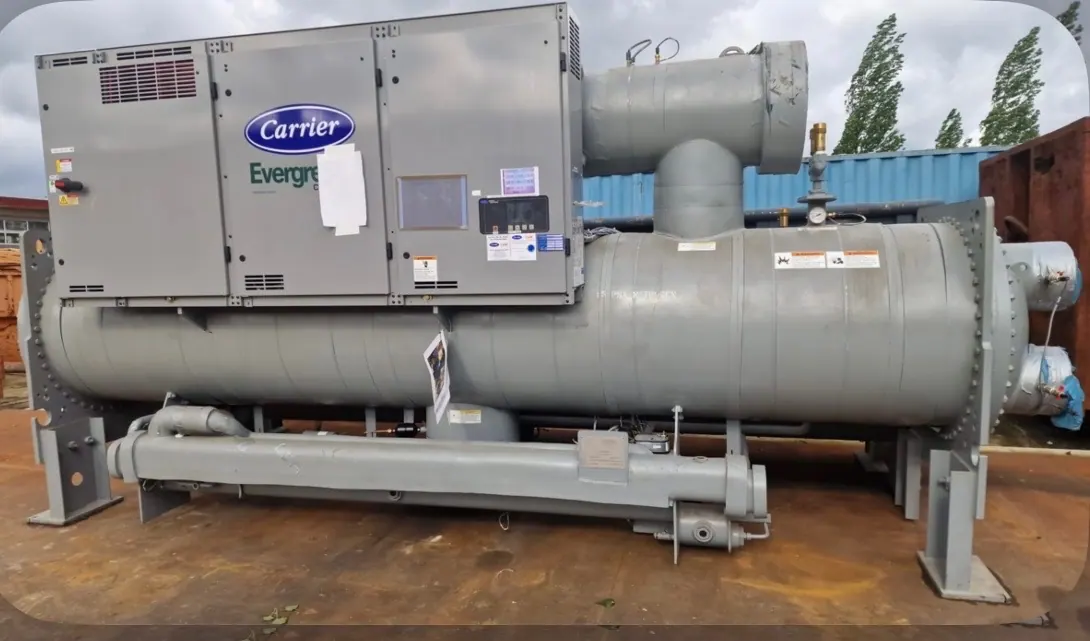
We buy chillers in basement plants in Dallas, Texas, with cash offers and upfront payment when a purchase is agreed. We handle removal, and the seller does not need to test the equipment.
From first photo to final haul, we take care of the details so you can move forward.
Share a nameplate photo, the location, and whatever you know about your equipment. No testing is required from you.
We review the chiller and your site information, then make an offer. Payment is upfront.
We handle disconnects, refrigerant recovery, crane and rigging, loading, freight and hauling.
A chiller in a basement plant can be a sale candidate even if it is idle or no longer runs. The removal route, however, matters alongside the equipment itself. Before considering how it might leave a Dallas property, establish what is being offered and where it sits: in a dedicated mechanical room, below grade in a larger plant, or in another enclosed area.
We buy used industrial and commercial water-cooled and air-cooled chillers, including centrifugal, screw, and scroll units, generally from 20 to more than 2,000 cooling tons. All refrigerants are considered. Capacity helps identify the machine, but a cooling ton is not its weight; lifting and transport planning depend on the actual equipment and site information.
For an initial review, share readable nameplate photographs if available, the manufacturer and model, stated capacity, refrigerant markings, and any known operating or storage history. Include a few wider views showing the chiller in its room. If the label is missing, damaged, or hard to reach, say so rather than guessing at the specifications.
Note whether the unit is operating, disconnected, partially dismantled, or simply out of service. Mention which components are included in the proposed sale and whether other chillers or plant equipment will remain. Service records, drawings, or prior removal plans can help when readily available, but you do not need to restart, test, repair, or clean the machine to request a review.
Describe the full path from the installation position to the point where equipment could be loaded: room doors, corridors, turns, stairs or ramps, elevators if relevant, and the exit to the loading area. Photographs taken from safe, permitted positions can reveal changes in ceiling height, narrow openings, fixed piping, or other obstacles that a view of the chiller alone will not show.
Share dimensions or structural limits only when they are known, and identify who can verify them. A route that looks open may still have a tight turn, a restricted floor loading, or a threshold that affects handling. If the equipment appears too large for an ordinary doorway, note the concern; the removal method is assessed for the actual layout rather than assumed from the room’s appearance.
A basement chiller may sit among pumps, piping, electrical feeds, controls, and equipment that the facility still needs. Identify the proposed sale boundary as clearly as possible: what belongs to the chiller, what is included, and what must stay connected or in place. If ownership or the boundary is uncertain, have the appropriate facility representative clarify it before removal is scheduled.
Do not open a refrigerant circuit or vent refrigerant. The buyer arranges and handles appropriate recovery with qualified personnel, along with the required disconnects, in coordination with the authorized site contact. That contact supplies accurate information about services and operating limits so the removal work can be planned without treating neighboring plant equipment as part of the sale.
Basement work can involve building controls beyond the mechanical space. The site contact should explain access approval, work hours, elevator or dock restrictions, staging options, site rules, and any areas that must stay clear. Depending on the property, security procedures, occupied spaces, shared corridors, or ongoing deliveries may shape the sequence. These conditions are confirmed for the actual site, not presumed from its location in Dallas.
We coordinate recovery, disconnects, rigging, crane work when needed, loading, freight, and hauling. The seller or site team does not need to hire a separate recovery crew, crane, or hauler for this scope. The buyer is responsible for the equipment work; the seller or site supplies accurate information, authorized access, site rules, and necessary approvals. Any unusual access restriction is best raised before a pickup date is set.
A cash offer depends on the asset and an actual project review, including the available equipment details and the practical removal scope. An offer is not guaranteed, and no single capacity or refrigerant description determines the result. If a purchase is agreed, the equipment included, access arrangements, work scope, and collection terms should be clear between the parties before removal begins.
Payment is made upfront before pickup on agreed terms. The chiller does not have to be running for consideration, and the seller is not expected to test, repair, restart, or prepare its refrigerant circuit. Confirm who has authority to approve the sale and who can approve site access; those may be different people.
Gather the identification photos, a short condition summary, the chiller’s basement location, and images or notes tracing the removal route to a loading point. Add known access restrictions and clarify what equipment is included. With that information, the asset and removal requirements can be reviewed before anyone commits to a handoff. If a detail is unknown, label it as unknown; accurate limits are more useful than an unverified estimate.

Air-cooled or water-cooled. Centrifugal, screw or scroll. From single units to large shutdown projects, we buy industrial chillers across Texas.
Send us your chiller details and nameplate photos for a cash offer. Don’t worry if you don’t know every specification—we can start with what you have.
Call or text(614) 715-3047TEXT NAMEPLATE PHOTOS ↗Prefer email?
saleselectricalbuyers@gmail.com