
SEND THE DETAILS
Share a nameplate photo, the location, and whatever you know about your equipment. No testing is required from you.
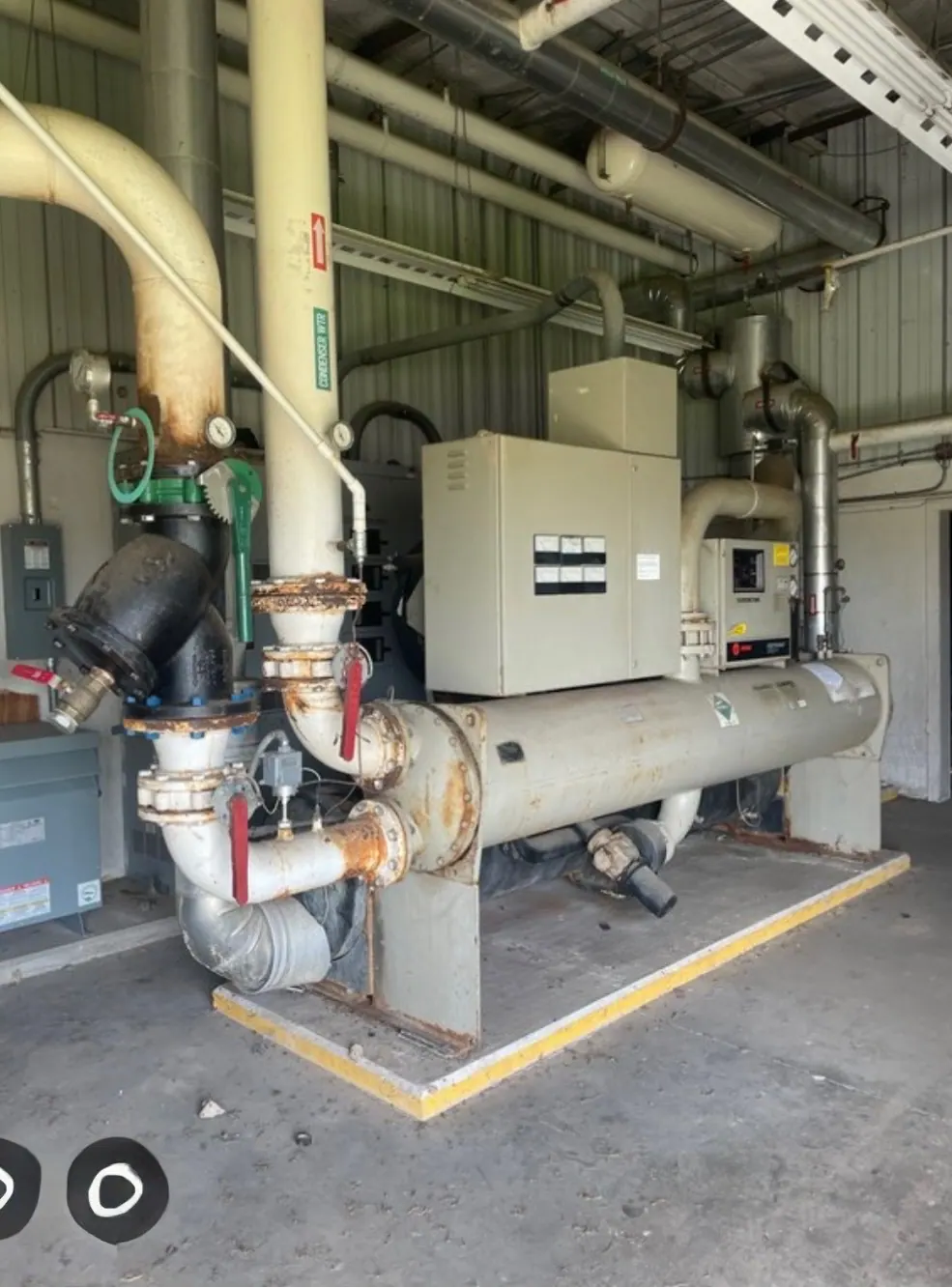
We buy modular chillers in Austin, Texas, with cash offers and upfront payment when a purchase is agreed. We handle removal, and the seller does not need to test the equipment.
From first photo to final haul, we take care of the details so you can move forward.
Share a nameplate photo, the location, and whatever you know about your equipment. No testing is required from you.
We review the chiller and your site information, then make an offer. Payment is upfront.
We handle disconnects, refrigerant recovery, crane and rigging, loading, freight and hauling.
For a modular chiller, a useful value review begins by defining the asset—not by assuming that every connected section belongs in the sale. Tell us whether you are offering the complete installation or particular modules, and identify controls, pumps, headers, piping, or other components that must remain. We buy used modular chillers and consider water-cooled and air-cooled equipment, generally from 20 to 2,000+ cooling tons, across refrigerants and conditions. Idle or non-running units can be considered; testing, restarting, or repairing one is not required.
A cash offer depends on the equipment and the removal project after review. Capacity alone does not establish value or removal cost: a cooling ton measures capacity, not the machine’s weight. If a purchase is agreed, payment is made upfront before pickup under the agreed terms. An offer is not guaranteed before the asset and scope have been reviewed.
Send any available nameplate information for each section being offered, along with the manufacturer, model, serial number, and capacity if known. For a modular bank, note how many modules there are and whether the units share controls, pumps, headers, or a common frame. A simple list is helpful when labels are difficult to read or several similar sections are installed together.
Current photos can fill gaps without putting the equipment into operation: take a wide view of the assembly, closer views of labels and connections, and images showing nearby equipment that is excluded. Mention known missing components, modifications, damage, storage history, or whether the unit is disconnected. Do not open refrigerant circuits or vent refrigerant to gather information.
Modular equipment can be easier to divide into manageable sections than a single large machine, but that should not be assumed from appearance. The actual construction, module dimensions, connections, access route, and available lifting points determine how each piece can be separated and handled. Shared piping or controls may also mean that the sale boundary needs to be marked clearly before work begins.
Tell us where the chiller sits and describe the route from its present position to a loading area. A mechanical room, roof, basement, or tight service corridor may bring different constraints. Door and hallway widths, ceiling height, stairs, floor limits, turns, overhead utilities, fencing, and staging space can affect the plan. Photos of the route and measurements you already have are useful; do not dismantle anything to obtain them.
The equipment may be near operating systems, occupied work areas, or services that need to stay in use. Identify adjacent machinery and utilities that are not part of the sale, and explain any site rules, access hours, permits, or required approvals known to you. The authorized site contact can confirm where the crew may work, which routes must remain open, and any restrictions on a crane or truck.
We arrange and handle appropriate disconnects, refrigerant recovery by qualified personnel, rigging, crane work when needed, loading, freight, and hauling. The removal method and sequence are determined from the actual equipment and site conditions. You are not expected to hire a recovery contractor, rigging crew, or hauler. The seller or site representative does need to provide accurate information, authorized access, applicable rules, and necessary approvals.
Refrigerant type and charge may be unknown, especially if the unit has been idle, altered, or partly dismantled. Share whatever records or label details are available, but do not run the chiller merely to check it and do not vent refrigerant or open the circuit. Recovery requirements are addressed as part of the removal scope, with qualified personnel arranged for the work.
Before pickup, the parties can confirm which modules and associated parts are included, the agreed payment terms, access arrangements, and the planned work area. If the facility has isolation procedures for nearby systems, the authorized contact should explain them during coordination. The work boundary should protect equipment and services that are staying on site.
To request a review, gather the equipment location, module count, available identification, recent photos, known condition, and a brief description of the route to the loading point. Include what is included and what must remain. If some details are unavailable, say so rather than guessing; an idle or non-running unit can still be reviewed without a test or repair.
Once the information is reviewed, the next discussion can address whether the equipment and removal scope are suitable for a purchase and what additional site details are needed. Any proposal depends on that review and the agreed scope. If accepted, payment is made before pickup on agreed terms, and removal is coordinated with the authorized site contact.

Air-cooled or water-cooled. Centrifugal, screw or scroll. From single units to large shutdown projects, we buy industrial chillers across Texas.
Send us your chiller details and nameplate photos for a cash offer. Don’t worry if you don’t know every specification—we can start with what you have.
Call or text(614) 715-3047TEXT NAMEPLATE PHOTOS ↗Prefer email?
saleselectricalbuyers@gmail.com