
SEND THE DETAILS
Share a nameplate photo, the location, and whatever you know about your equipment. No testing is required from you.
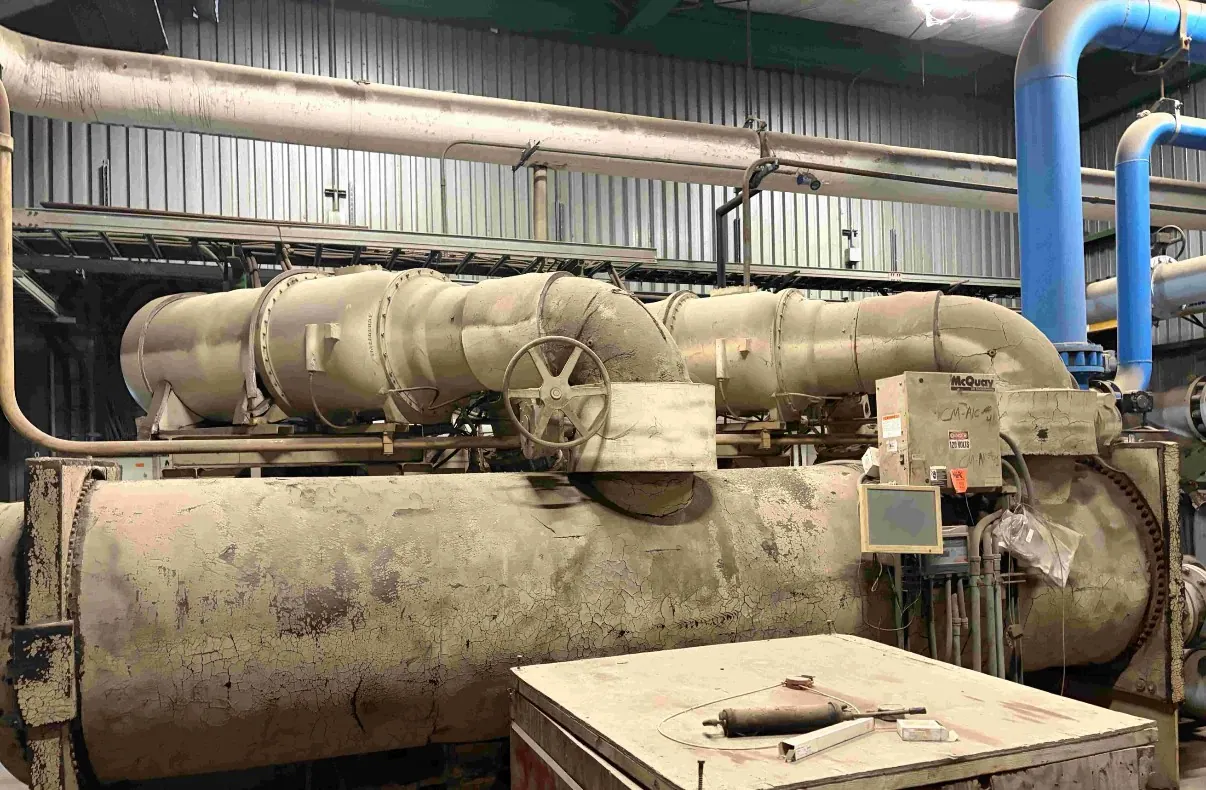
We buy 1,000 to 1,999 ton chillers in Corpus Christi, Texas, with cash offers and upfront payment when a purchase is agreed. We handle removal, and the seller does not need to test the equipment.
From first photo to final haul, we take care of the details so you can move forward.
Share a nameplate photo, the location, and whatever you know about your equipment. No testing is required from you.
We review the chiller and your site information, then make an offer. Payment is upfront.
We handle disconnects, refrigerant recovery, crane and rigging, loading, freight and hauling.
When a 1,000–1,999 ton chiller is being retired in Corpus Christi, the first useful question is not whether it can be restarted. It is what equipment is being offered, where it sits, and how a removal could fit around the facility’s other needs. A central plant may have adjacent machinery, operating systems, restricted work areas, or a defined shutdown window; the actual site contact can explain what applies.
We buy large water-cooled and air-cooled chillers, including centrifugal and screw units in this capacity range. Idle and non-running equipment can be considered, and all refrigerants are considered. A purchase is subject to reviewing the specific asset and project, so capacity alone does not establish an offer.
Share the nameplate information if it is readable, the manufacturer and model if known, the approximate capacity, and whether the chiller is operating, idle, or non-running. Current overall and close-up photos can help show the machine, its condition, nearby equipment, and the space around it. If details are missing, say so rather than guessing.
Identify what is included in the proposed sale. Controls, pumps, motors, starters, or other components may be part of the package, or may need to remain with the facility; clarify the boundary where possible. A simple marked photo can help distinguish the chiller from connected or neighboring equipment. This keeps the equipment under review aligned with the intended handoff.
A cooling ton measures refrigeration capacity, not the chiller’s weight. Weight, dimensions, lifting points, configuration, and the route out all matter when planning handling. If weight or drawings are available, include them; if they are not, note that they are unknown. There is no need to infer a machine’s weight from its tonnage.
Describe the route from the installed position to the loading area. Relevant details may include door and corridor clearances, stairs or ramps, overhead obstructions, floor transitions, exterior access, and places where a truck or crane could stage. If the unit is in a basement or another constrained space, photos of openings and the full route are more useful than a general description alone.
For equipment in Corpus Christi, explain whether it is indoors or exposed outside and note any known site-specific restrictions. Outdoor exposure, including coastal conditions where present, may affect visible corrosion or fasteners; actual condition needs review rather than assumption. Share practical access information such as gate procedures, escorts, approved work hours, loading locations, and any required advance notice.
Large plant equipment may sit near systems that must remain in service, or within an area where work is allowed only during a particular window. The authorized site contact should identify what can be isolated, which routes are permitted, and what approvals are required. Those details help shape a feasible removal scope without asking the seller to diagnose the chiller.
If a purchase is agreed, we arrange and handle appropriate refrigerant recovery with qualified personnel, along with the disconnects, rigging, crane work when needed, loading, freight, and hauling covered by the agreed scope. The work is coordinated with the authorized site contact and planned for the actual equipment and conditions.
The seller does not need to test, run, repair, or restart the chiller. Do not vent refrigerant or open the refrigerant circuit. The site’s role is to provide accurate available information, authorized access, site rules, and necessary approvals. Tell us if utilities are connected or if the facility has particular isolation procedures; site personnel can coordinate those requirements with the removal team.
A cash offer depends on the equipment and the project review, including the confirmed scope and removal conditions; it is not guaranteed. A high-capacity unit does not promise a particular amount, and an idle or non-running machine is not automatically excluded. If a purchase is agreed, payment is made upfront before pickup on the agreed terms. Confirm the equipment included, payment terms, access arrangements, and collection plan before the handoff.
To begin, provide the equipment identification you have, recent photos, known operating status, a description of included components, and the location and access route within the facility. Include any deadline or work-window requirement if known. We can review those details and discuss whether the chiller and removal project fit an offer. You do not need to prepare the machine or arrange recovery, a crane, or a hauler before that review.

Air-cooled or water-cooled. Centrifugal, screw or scroll. From single units to large shutdown projects, we buy industrial chillers across Texas.
Send us your chiller details and nameplate photos for a cash offer. Don’t worry if you don’t know every specification—we can start with what you have.
Call or text(614) 715-3047TEXT NAMEPLATE PHOTOS ↗Prefer email?
saleselectricalbuyers@gmail.com