
SEND THE DETAILS
Share a nameplate photo, the location, and whatever you know about your equipment. No testing is required from you.
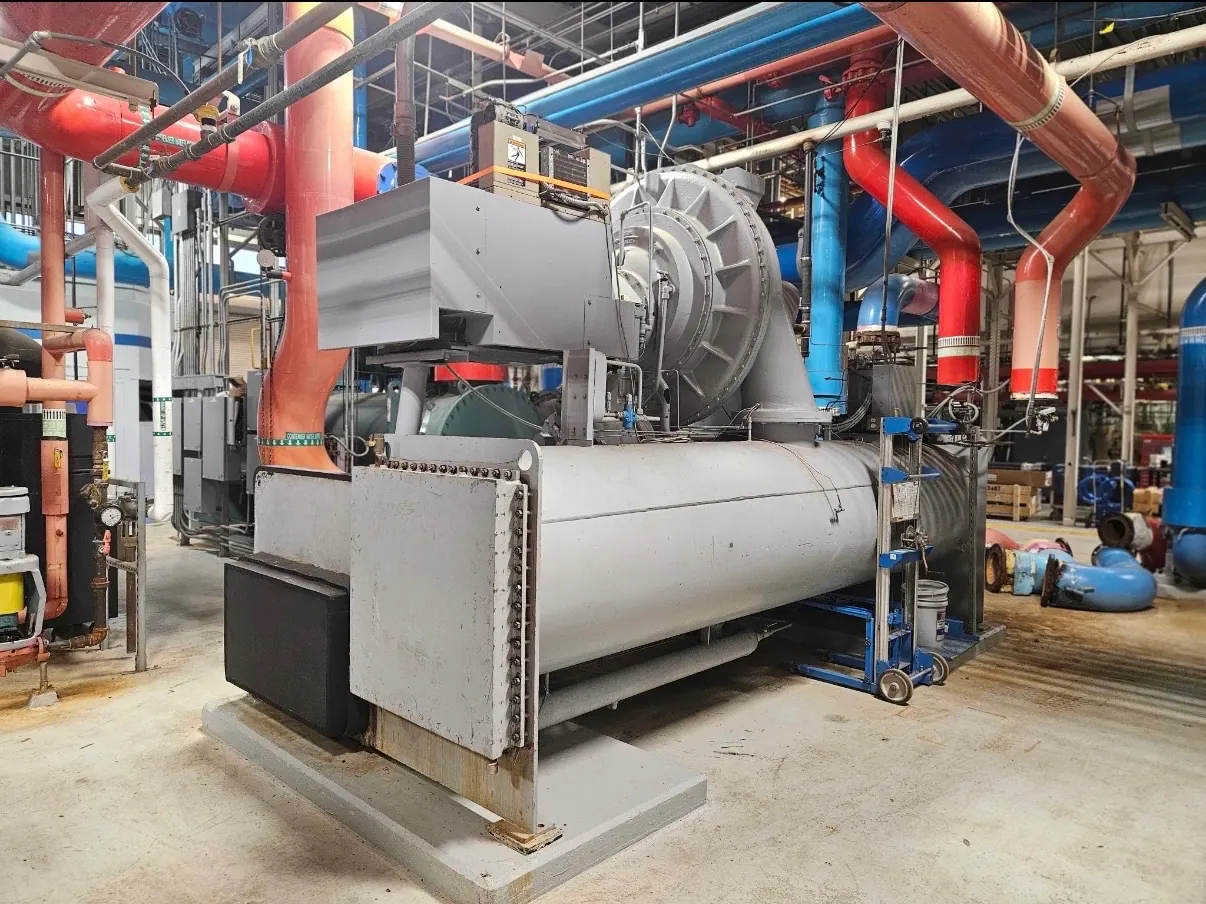
We buy chillers of 2,000 tons and above in Corpus Christi, Texas, with cash offers and upfront payment when a purchase is agreed. We handle removal, and the seller does not need to test the equipment.
From first photo to final haul, we take care of the details so you can move forward.
Share a nameplate photo, the location, and whatever you know about your equipment. No testing is required from you.
We review the chiller and your site information, then make an offer. Payment is upfront.
We handle disconnects, refrigerant recovery, crane and rigging, loading, freight and hauling.
A 2,000-ton-or-larger chiller is a substantial asset to identify and move, but its stated capacity does not establish its physical weight, condition, or removal requirements. We buy large industrial and commercial water-cooled and air-cooled chillers, including centrifugal, screw, and scroll units. Idle and non-running machines can be considered, and we review all refrigerants.
For an initial review, provide whatever is readily available: manufacturer and model, nameplate details, approximate dimensions, photographs, refrigerant markings, and a brief account of the machine’s history. Drawings or prior rigging information can help if they exist. You do not need to assemble a complete engineering package, restart the chiller, or arrange a test before sharing the basics.
Cooling tons describe capacity, not shipping weight. A unit rated at 2,000 tons or more may have a configuration, number of sections, or dismantling history that affects how it can be handled. Weight records, lifting points, dimensions, and the path from the installed position to a truck are separate details to verify when planning the move.
Let us know whether the equipment is intact, partly dismantled, or missing components, and whether accessories are included in the proposed sale. If the unit is indoors, elevated, or in a restricted mechanical area, photos showing the surrounding space and likely exit route can make the first scope discussion more useful. Final lifting arrangements depend on the actual equipment and site.
A large chiller may share a plant area with equipment that must remain in service. Identify the asset being offered and, as far as known, the boundary between its electrical and water connections and systems that are staying. A facility representative can explain which services must not be interrupted, what work windows are permitted, and which approvals are required.
Do not open the refrigerant circuit or vent refrigerant to prepare the machine. If refrigerant may remain, tell us what is known about its current charge and condition; that information may be incomplete, especially for a unit that has been idle. We arrange appropriate recovery by qualified personnel as part of the agreed removal scope. You do not need to hire a separate recovery contractor for our pickup.
In Corpus Christi, the specific property—not the city name or tonnage—determines the practical route and work plan. The chiller might be on a pad, inside a plant, or elsewhere on the site; those possibilities should be confirmed rather than assumed. Note any access limits, overhead obstructions, narrow openings, shared work areas, or restrictions on truck and crane positioning that the site contact already knows about.
For equipment exposed outdoors, describe visible corrosion or other known deterioration if possible, since condition can affect handling. If the route crosses an active production, warehouse, or loading area, flag the operating schedule and any areas that must remain clear. The authorized site contact supplies accurate information, approved access, applicable site rules, and necessary permissions. We coordinate the equipment work with that contact.
If a purchase is agreed, we coordinate the appropriate disconnects, refrigerant recovery, rigging, crane work when needed, loading, freight, and hauling. The actual method is selected for the machine and property after the relevant conditions are reviewed; a crane is not assumed for every removal. You are not expected to test, repair, restart, or dismantle the chiller for us.
The seller’s practical role is to identify the asset accurately and make sure the authorized person can arrange access and communicate site requirements. If shared services, neighboring equipment, or facility operations impose limits, raise them before pickup planning is finalized. Clear boundaries help the work proceed without treating unrelated plant equipment as part of the sale.
A cash offer is based on review of the actual chiller, its condition and included components, and the removal and transport scope. A large capacity rating alone does not determine whether we can purchase a particular unit or what an offer might be. Any offer is subject to review, and a purchase is not guaranteed.
When a purchase is agreed, payment is made upfront before pickup on the terms confirmed with the seller. Before work is scheduled, the parties should confirm which equipment is transferring, the agreed terms, access arrangements, and the intended pickup coordination. This gives the property contact a clear basis for authorizing the work.
To begin, send the chiller’s available identification and photos, its location on the property, known condition and refrigerant information, and any details about access or services that must remain active. Include the name or role of the person authorized to discuss the equipment and coordinate site access. If some details are unknown, say so rather than estimating; the review can start with the information you have.

Air-cooled or water-cooled. Centrifugal, screw or scroll. From single units to large shutdown projects, we buy industrial chillers across Texas.
Send us your chiller details and nameplate photos for a cash offer. Don’t worry if you don’t know every specification—we can start with what you have.
Call or text(614) 715-3047TEXT NAMEPLATE PHOTOS ↗Prefer email?
saleselectricalbuyers@gmail.com