
SEND THE DETAILS
Share a nameplate photo, the location, and whatever you know about your equipment. No testing is required from you.
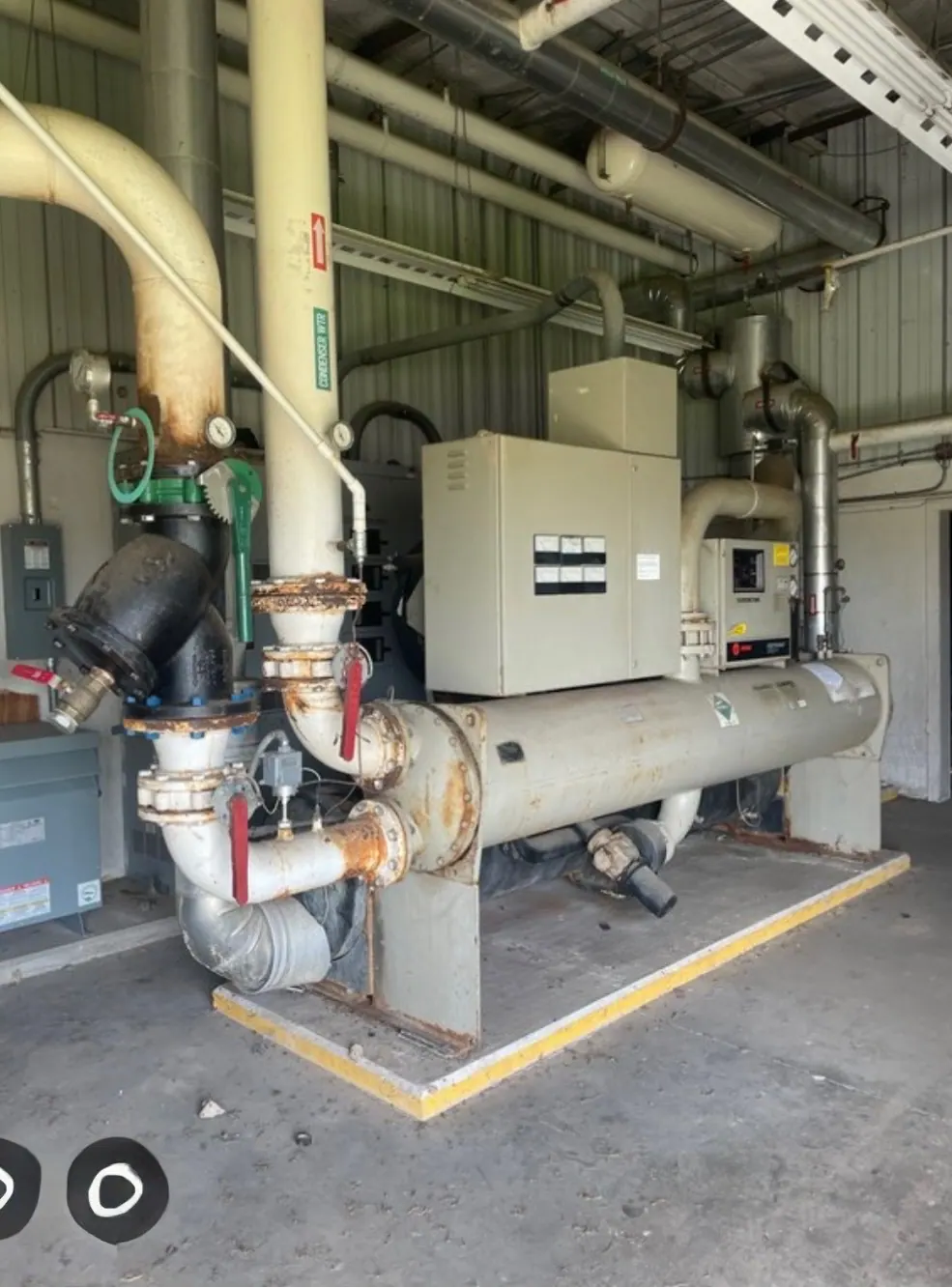
We buy chillers of 2,000 tons and above in Austin, Texas, with cash offers and upfront payment when a purchase is agreed. We handle removal, and the seller does not need to test the equipment.
From first photo to final haul, we take care of the details so you can move forward.
Share a nameplate photo, the location, and whatever you know about your equipment. No testing is required from you.
We review the chiller and your site information, then make an offer. Payment is upfront.
We handle disconnects, refrigerant recovery, crane and rigging, loading, freight and hauling.
A chiller rated at 2,000 tons or more may become available when a plant is replaced, a building changes use, or equipment is no longer needed. At this scale, the first useful step is not to guess what removal will cost. It is to identify exactly what is being offered, what must remain in service, and when the machine can be released. We buy large industrial and commercial chillers in Austin, Texas, subject to review of the equipment and project.
List each chiller separately, even when several units share a plant room or sit on one project schedule. Record the manufacturer and model if readable, serial number, stated capacity, equipment type, and refrigerant if known. Note whether the unit is operating, idle, incomplete, or non-running. Unknown details can be marked unknown; there is no need to open a circuit or restart a machine to fill gaps.
Also clarify what is included in the proposed sale. A chiller may sit beside pumps, heat exchangers, controls, piping, or other equipment that the facility intends to keep. Identify those boundaries in writing or on a marked-up photo. If ownership or authority to sell is shared, establish who can approve the transaction and authorize access before a pickup date is discussed.
“2,000 tons” describes cooling capacity, not the machine’s weight. Large chillers can differ substantially in dimensions, construction, and configuration, so the capacity label cannot determine a crane or rigging plan. Share any available drawings, equipment schedules, nameplate photos, shipping records, or verified weight information. If those records are unavailable, say so rather than estimating.
Useful photos show the full unit, its labels, the surrounding plant area, and potential openings or routes toward an exit. A sketch or brief description of the route can help show turns, stairs, elevators, overhead restrictions, and where a truck might stage. These details support an initial review; actual handling requirements depend on the equipment and site conditions.
For a replacement project, share the expected date the outgoing chiller can be released, the installation sequence, and any periods when the work area must stay clear. If a building is closing or a property handoff is approaching, note the relevant deadline and whether access will remain available afterward. Early schedule information can help identify conflicts before the unit is ready to move.
Tell us who controls the plant room and who can approve work on site. Depending on the facility, removal may need to fit around occupied areas, active cooling, security procedures, delivery windows, noise limits, or restricted routes. The authorized site contact supplies applicable rules, access arrangements, and approvals; the removal plan is coordinated against the actual constraints.
We consider centrifugal, screw, and scroll chillers, including idle and non-running equipment, and consider all refrigerants. The review is based on the specific asset, the information available, and the work needed to remove it. A cash offer is not automatic or guaranteed. If a purchase is agreed, payment is made upfront before pickup under the terms confirmed with the authorized seller.
You do not need to test, repair, clean, or restart the chiller to request a review. Do not vent refrigerant or open the circuit. We arrange appropriate refrigerant recovery with qualified personnel, along with disconnects, rigging, crane work when needed, loading, freight, and hauling. The seller is not expected to hire those providers. Site personnel still need to provide accurate information, authorized access, site rules, and required approvals.
Start with a concise inventory and attach whatever records and photos are already available. Include the location within the property, known operating status, refrigerant information if documented, what equipment is included, and the earliest practical availability date. Add known route or access restrictions and the name or role of the person authorized to coordinate the site. Do not delay the initial review just because a specification is missing.
Once the equipment and project details are reviewed, the next discussion can address scope, timing, and whether a purchase offer is appropriate. Keep the inventory current if the replacement sequence changes or if the list of included components is revised. For a very large chiller, a clear account of the asset and its release window is a practical starting point; the removal plan follows from the conditions actually found at the site.

Air-cooled or water-cooled. Centrifugal, screw or scroll. From single units to large shutdown projects, we buy industrial chillers across Texas.
Send us your chiller details and nameplate photos for a cash offer. Don’t worry if you don’t know every specification—we can start with what you have.
Call or text(614) 715-3047TEXT NAMEPLATE PHOTOS ↗Prefer email?
saleselectricalbuyers@gmail.com