
SEND THE DETAILS
Share a nameplate photo, the location, and whatever you know about your equipment. No testing is required from you.
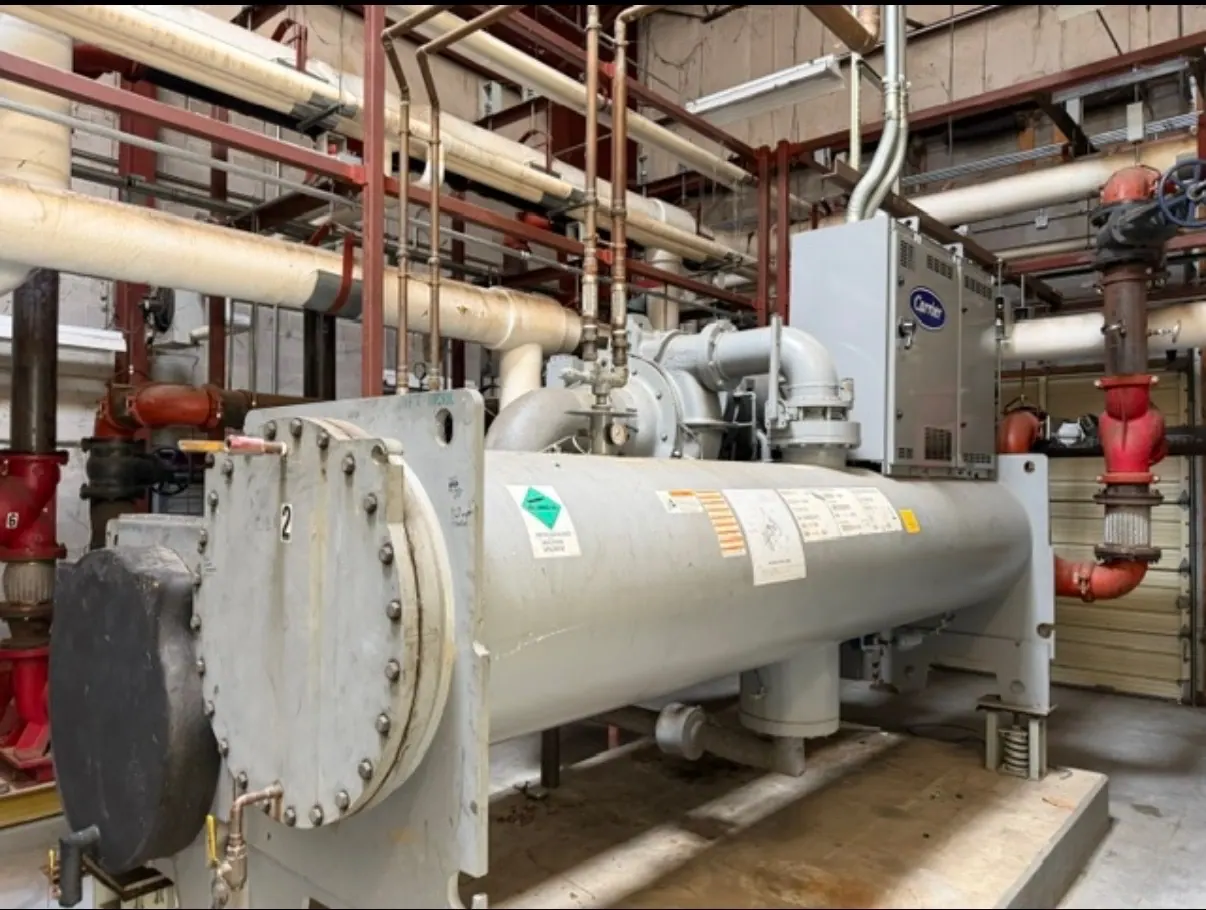
We buy chillers of 2,000 tons and above in El Paso, Texas, with cash offers and upfront payment when a purchase is agreed. We handle removal, and the seller does not need to test the equipment.
From first photo to final haul, we take care of the details so you can move forward.
Share a nameplate photo, the location, and whatever you know about your equipment. No testing is required from you.
We review the chiller and your site information, then make an offer. Payment is upfront.
We handle disconnects, refrigerant recovery, crane and rigging, loading, freight and hauling.
A chiller rated at 2,000 tons or more is a substantial asset, and arranging its removal may involve people who have different responsibilities. First confirm who has authority to sell the equipment and who can approve access to the property. They may be the same person, or separate contacts such as an asset owner and a facilities representative. If a contractor is managing a replacement project, clarify who can make the sale decision rather than assuming project responsibility includes it.
We buy used industrial and commercial chillers, including units in this capacity range. A cooling-ton rating describes capacity; it does not establish the machine’s weight or how it can be lifted. The offer and removal scope depend on the identified equipment and the actual project review. A purchase is not automatic.
Useful first details include the manufacturer and model, serial or nameplate information, approximate dimensions, and the chiller’s location on site. Share clear photos if they can be taken safely, along with available drawings or service records. Note what is known about operating condition, missing components, modifications, and refrigerant. Unknowns are fine to identify as unknown; there is no need to restart or test the machine.
Also distinguish the chiller from anything that should remain. Large units may sit among pumps, piping, controls, or other equipment that is not part of the sale. Point out the intended boundary and any connected systems or neighboring assets that must stay in service. The actual configuration will need review before the work is planned.
For a site in El Paso, describe how a removal crew and transport vehicle would reach the unit. Relevant details may include the entry gate, check-in requirements, permitted work hours, interior travel route, loading area, and distance to an exit. Mention known restrictions such as narrow openings, stairs, overhead obstacles, limited maneuvering room, or routes shared with ongoing operations. These are planning questions, not reasons to assume a particular site condition.
Make clear who can grant access on the scheduled day and who can explain site rules. A person authorized to approve the sale may not control gate entry, contractor orientation, lockout procedures, or work permits. Getting those roles identified early helps avoid a collection plan that is approved commercially but cannot proceed on site.
If the chiller is part of a plant that remains active, explain which areas, utilities, and equipment cannot be disturbed. A manufacturing facility, for example, might rely on nearby process cooling or have production traffic crossing the removal route. The site contact can identify those constraints and any permitted work window; the removal plan should be coordinated with the actual facility rather than assuming shutdown.
For a replacement project, share the anticipated changeover sequence and any deadline that affects when the old unit can be released. The schedule still needs to account for approvals, preparation, handling, and transport. Identify the contractor or facility contact who can confirm the handoff and coordinate with the person authorized to sell.
We arrange and handle appropriate refrigerant recovery with qualified personnel, along with equipment disconnects, rigging, crane work when needed, loading, freight, and hauling. The scope is coordinated to the actual machine and site. The seller does not need to hire a recovery company or hauler, arrange a crane, or prepare the chiller for removal.
Do not vent refrigerant or open the circuit to help with an offer. If the refrigerant, remaining charge, or service history is uncertain, share the markings and records available and say what is not known. The recovery plan can then be considered as part of the equipment review.
The seller or site contact supplies accurate information, authorized access, site rules, and required approvals. Our team coordinates the equipment work. That division matters at a large installation: site personnel may need to authorize entry or explain isolation boundaries, but they are not being asked to test, repair, restart, or disconnect the chiller.
To begin, gather the identification details, safe photos, known condition, access route, and names or roles of the people who can authorize the sale and site entry. Send what is available without delaying to create a complete technical dossier. We can review the asset and collection circumstances, then discuss whether to make a cash offer. Any offer depends on that review and is not guaranteed.
If a purchase is agreed, payment is made upfront before pickup on the terms agreed with the seller. Confirm in writing what equipment is included, who will provide access, and the collection arrangements before the work is scheduled. Clear authority and access information are especially useful for a 2,000-ton-and-larger chiller because the commercial handoff and physical removal may require coordination across several site roles.

Air-cooled or water-cooled. Centrifugal, screw or scroll. From single units to large shutdown projects, we buy industrial chillers across Texas.
Send us your chiller details and nameplate photos for a cash offer. Don’t worry if you don’t know every specification—we can start with what you have.
Call or text(614) 715-3047TEXT NAMEPLATE PHOTOS ↗Prefer email?
saleselectricalbuyers@gmail.com