
SEND THE DETAILS
Share a nameplate photo, the location, and whatever you know about your equipment. No testing is required from you.
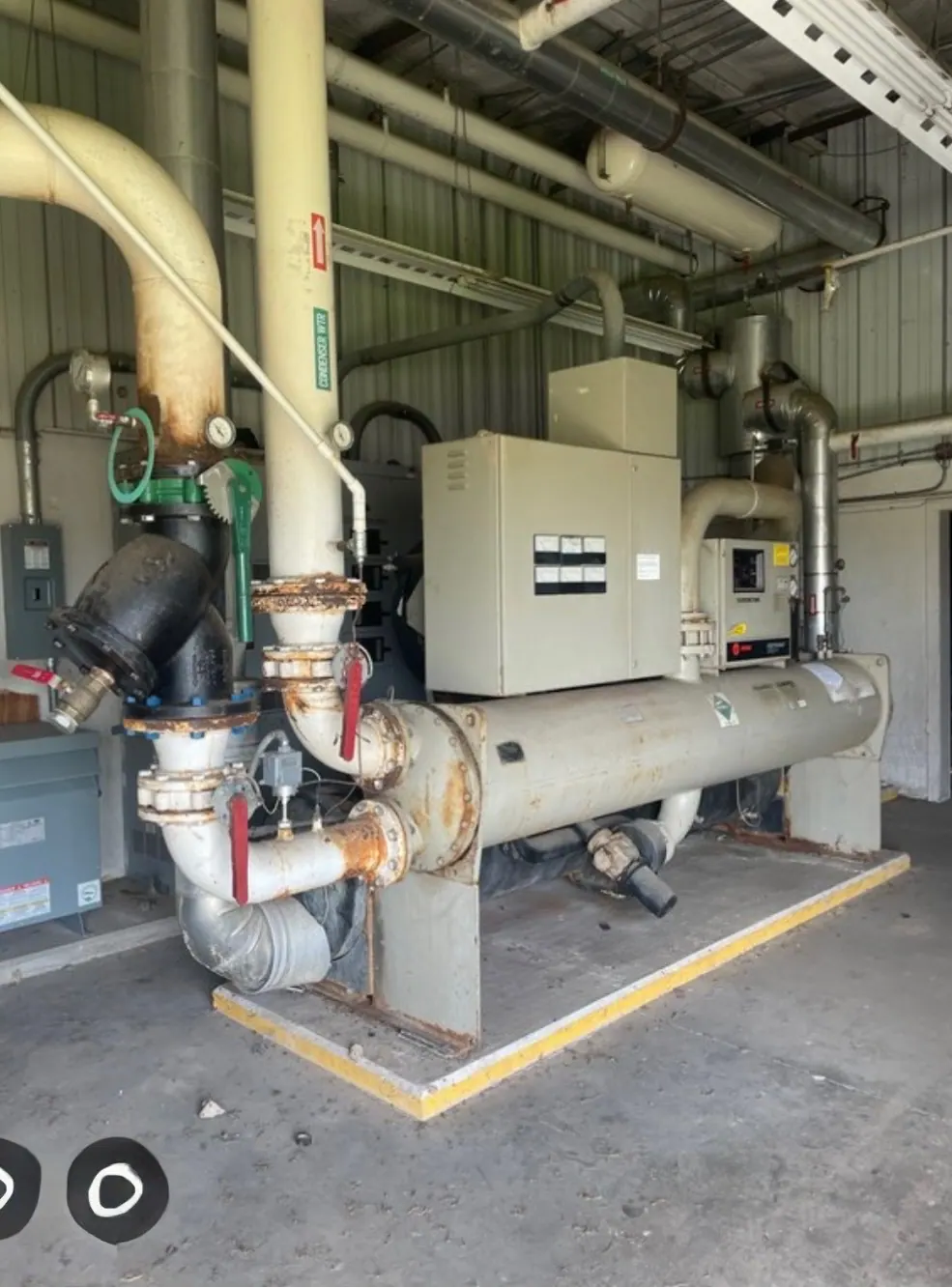
We buy York chillers in Austin, Texas, with cash offers and upfront payment when a purchase is agreed. We handle removal, and the seller does not need to test the equipment.
From first photo to final haul, we take care of the details so you can move forward.
Share a nameplate photo, the location, and whatever you know about your equipment. No testing is required from you.
We review the chiller and your site information, then make an offer. Payment is upfront.
We handle disconnects, refrigerant recovery, crane and rigging, loading, freight and hauling.
A York chiller can sit at the center of a much larger cooling system, but a sale should identify the equipment itself and draw a clear line around what remains. We buy used York water-cooled and air-cooled chillers, including centrifugal, screw, and scroll units. Equipment is considered across a general range of 20 to 2,000+ cooling tons, and all refrigerants are considered. The nameplate starts the conversation; it does not establish the machine’s present configuration or condition.
List what is included in the proposed sale: the chiller, any attached or dedicated controls, and other components you intend to transfer. Separately identify pumps, piping, electrical gear, cooling towers, or building controls that are outside the sale or must stay in service. If the boundary is uncertain, mark it on a photograph or explain it in writing before removal is planned.
Useful first details include a clear nameplate photo, overall images, approximate dimensions if known, and the unit’s current location. Share the model and serial information when legible, along with any records describing modifications, refrigerant changes, repairs, or shutdown. If something is unknown, say so rather than inferring it from an old document.
A chiller’s cooling-ton rating describes capacity, not lifting weight. Do not use that number to estimate how much a crane or floor can support. You do not need to test, restart, repair, or open the refrigerant circuit to request a review. Idle and non-running equipment can be considered, subject to review of the actual asset and project.
Before a move, the facility’s authorized people need to identify which connections belong to the chiller and which serve other equipment. Water lines, electrical feeds, controls, and shared headers may cross the proposed work area or continue to support operating systems. Their arrangement varies, so the sale boundary and isolation sequence must be confirmed at the site rather than guessed from photographs.
We coordinate the agreed chiller work with the authorized site contact. The buyer is responsible for equipment work, including appropriate refrigerant recovery arranged with qualified personnel, disconnects, rigging, loading, freight, and hauling. The seller or site provides accurate information, authorized access, applicable site rules, and necessary approvals. Sellers should not vent refrigerant or open circuits.
Removal planning follows the path from the installed position to the loading area. Door and corridor clearances, stairs, overhead obstructions, floor transitions, and nearby operating equipment may affect the method. A roof, basement, or enclosed plant room may require a different approach from an accessible outdoor location. These are questions to verify for the actual building, not reasons to assume a particular site condition.
Send photographs of the chiller and visible access route, taken from safe locations. Note known restrictions such as limited work hours, occupied areas, loading-zone reservations, escort requirements, or rules for contractors. If the route depends on a freight elevator, removable wall section, or crane position, mention that and share any relevant limits already documented. The removal plan can then be coordinated with the person authorized to approve access.
Once the equipment and route are understood, the pickup plan can address recovery, disconnects, rigging, and loading in sequence. A crane may be needed, but the correct handling method depends on the machine’s verified weight and geometry, available access, and site constraints. Provide reliable weight or lifting information if you have it; do not substitute capacity tonnage for a verified machine weight.
Freight and hauling are coordinated as part of the agreed removal. Timing, work area, access, and the equipment included should be settled with the authorized site contact before pickup. If other contractors are isolating utilities or working nearby, identify that coordination early so the scope and schedule do not rely on an unconfirmed handoff.
A cash offer depends on the asset information and review of the actual project, including what is included and the practical removal scope. An offer is not guaranteed, and not every unit will necessarily be purchased. If a purchase is agreed, payment is made upfront before pickup on the terms agreed with the seller. Confirm which equipment is covered and who has authority to approve the sale before setting the collection.
To begin, gather the nameplate image, several photographs, known operating or shutdown history, and a concise description of what is included. Add the chiller’s location within the facility and any known route or access restrictions. There is no need to arrange a test, repair, refrigerant recovery, crane, or hauling service before asking for a review. Clear information lets the buyer assess both the York chiller and the work required to remove it, while leaving unknown details open for confirmation.

Air-cooled or water-cooled. Centrifugal, screw or scroll. From single units to large shutdown projects, we buy industrial chillers across Texas.
Send us your chiller details and nameplate photos for a cash offer. Don’t worry if you don’t know every specification—we can start with what you have.
Call or text(614) 715-3047TEXT NAMEPLATE PHOTOS ↗Prefer email?
saleselectricalbuyers@gmail.com