
SEND THE DETAILS
Share a nameplate photo, the location, and whatever you know about your equipment. No testing is required from you.
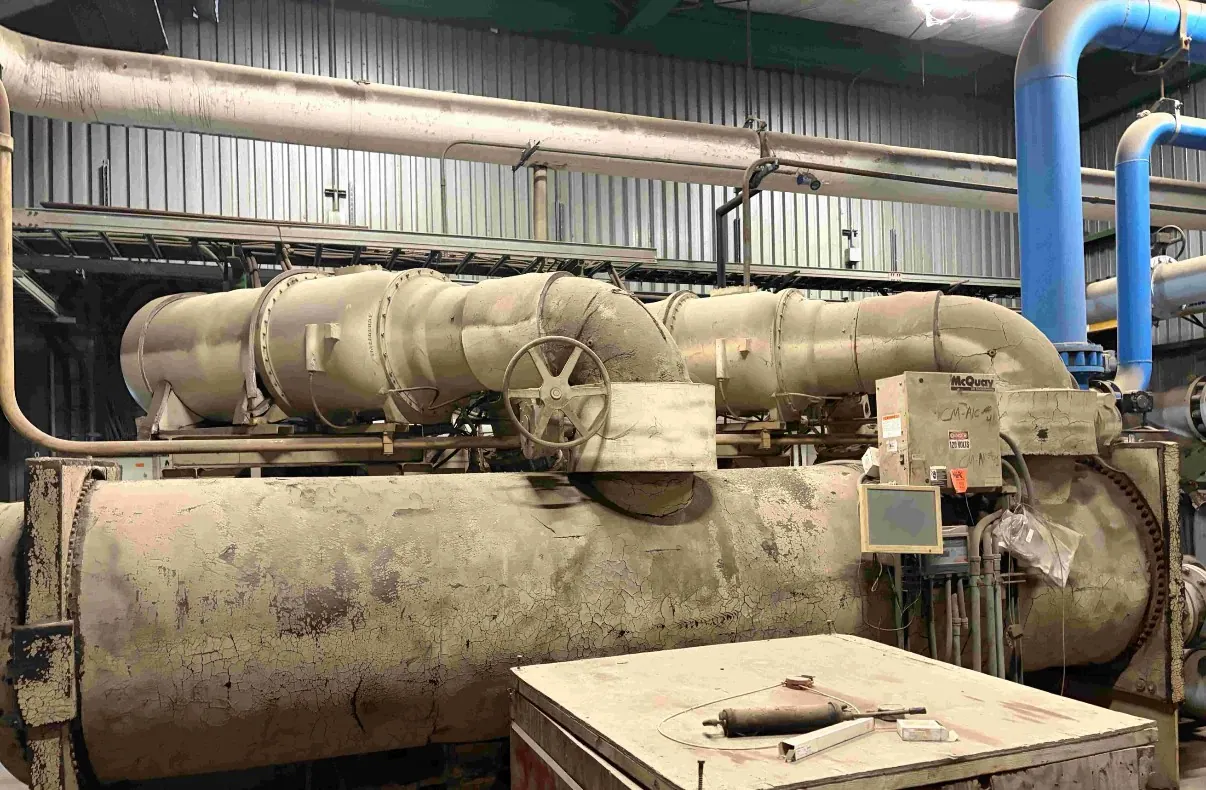
We buy used industrial chillers in Fort Bend County, Texas, with cash offers and upfront payment when a purchase is agreed. We handle removal, and the seller does not need to test the equipment.
From first photo to final haul, we take care of the details so you can move forward.
Share a nameplate photo, the location, and whatever you know about your equipment. No testing is required from you.
We review the chiller and your site information, then make an offer. Payment is upfront.
We handle disconnects, refrigerant recovery, crane and rigging, loading, freight and hauling.
When a chiller is leaving a facility in Fort Bend County, the first useful decision is what exactly is being offered. Identify the machine separately from nearby pumps, piping, controls, cooling towers, or other chillers. Some components may be part of a shared system or needed for equipment that will remain; do not include them by implication. A few clear photographs and a simple description of what stays can help keep the review and eventual removal scope aligned.
We buy used water-cooled and air-cooled industrial or commercial chillers, including centrifugal, screw, and scroll units. We generally consider equipment from 20 to more than 2,000 cooling tons, and consider all refrigerants. A cooling ton measures capacity, not the machine’s weight, so it does not establish what lifting or hauling equipment a particular pickup will need.
Useful starting details include the manufacturer and model from the equipment label, capacity if available, chiller type, refrigerant marking, and whether the unit is operating, idle, disconnected, or non-running. Mention known missing parts, modifications, or service history, but do not guess at details you cannot verify. If the label is difficult to reach, send other identifying information rather than moving equipment or opening a panel to obtain it.
Current photographs can show the unit’s condition and position without a test run. Take them only from safe, authorized locations: a label view, a full view of the chiller, and views of the route toward a loading area may be helpful. If a room, gate, overhead obstruction, or narrow route could affect removal, note it plainly. No seller-run test, repair, restart, or refrigerant-circuit work is needed to begin a review.
A chiller can be surplus while other facility activity continues. If connected equipment will stay in service, tell us which unit is available and identify any known limits on isolation, access, or work timing. The authorized site contact can clarify operating rules and approvals; do not disconnect utilities or alter shared systems to prepare the asset. The removal sequence must fit the actual installation and the site’s permitted work arrangements.
For a unit in a mechanical room or plant area, access details may matter as much as the nameplate. Describe doorways, turns, stairs, overhead clearance, floor or ground conditions, and the route to the loading point where these are known. For outdoor equipment, note gates, fences, nearby structures, and any restricted approach. These are details to review, not reasons to assume a particular machine cannot be moved.
If a purchase is agreed, we coordinate appropriate refrigerant recovery with qualified personnel, along with disconnects, rigging, crane work when needed, loading, freight, and hauling. The appropriate method depends on the chiller and its location. Sellers should not vent refrigerant, open circuits, or arrange recovery themselves for this review. Site staff provide accurate equipment information, authorized access, applicable site rules, and necessary approvals.
Responsibility for the equipment work rests with the buyer under the agreed scope. The site still needs to identify who can authorize access and explain operating constraints, safety procedures, or scheduling limits. If the unit is tied into shared piping or electrical service, the authorized facility representative should explain what can be isolated and when. That coordination protects surrounding equipment and helps avoid a mismatch between the offered asset and the work planned.
An idle, stored, or non-running chiller is not automatically excluded. Describe its known condition as it stands, including whether it remains connected and whether components are missing. Do not restart it, commission a test, or repair it simply to support an offer. Review depends on the information available and the actual equipment and removal project, not on a seller-provided performance demonstration.
A cash offer depends on the asset and project review, including the equipment details and practical removal scope; it is not guaranteed. Capacity alone cannot establish a value or removal plan. If a purchase is agreed, payment is made upfront before pickup on terms agreed with the seller. The equipment boundary, access arrangements, approvals, and timing should be clear before the work begins.
Assemble the identification you have, several safe photographs, a short description of condition, and a note explaining what is included and what must remain. Add any known access restrictions and the name or role of the person authorized to coordinate site arrangements. Share the information for review without testing, repairing, disconnecting, or opening the chiller. Once the asset and site details are understood, the equipment and potential removal scope can be discussed together.

Air-cooled or water-cooled. Centrifugal, screw or scroll. From single units to large shutdown projects, we buy industrial chillers across Texas.
Send us your chiller details and nameplate photos for a cash offer. Don’t worry if you don’t know every specification—we can start with what you have.
Call or text(614) 715-3047TEXT NAMEPLATE PHOTOS ↗Prefer email?
saleselectricalbuyers@gmail.com