
SEND THE DETAILS
Share a nameplate photo, the location, and whatever you know about your equipment. No testing is required from you.
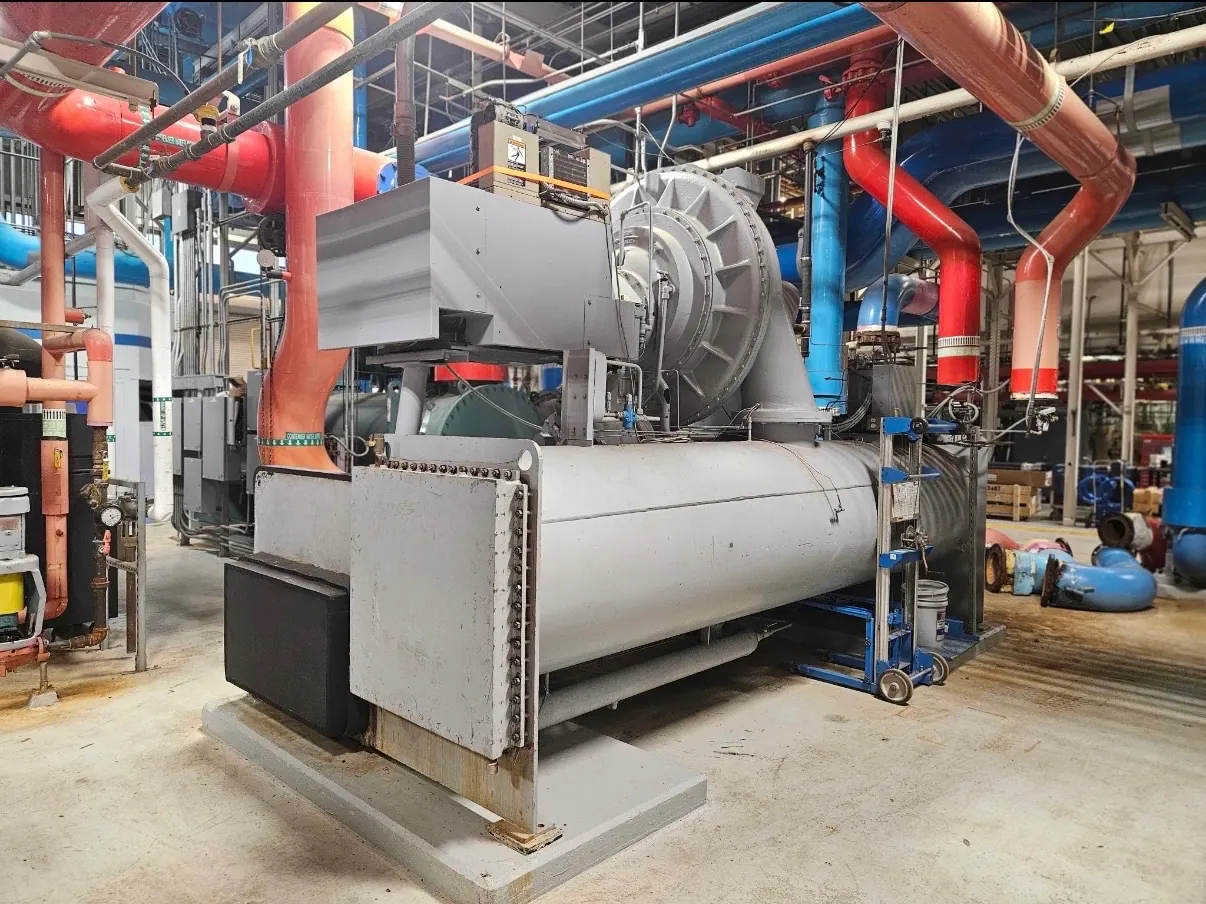
We buy used industrial chillers in Galveston County, Texas, with cash offers and upfront payment when a purchase is agreed. We handle removal, and the seller does not need to test the equipment.
From first photo to final haul, we take care of the details so you can move forward.
Share a nameplate photo, the location, and whatever you know about your equipment. No testing is required from you.
We review the chiller and your site information, then make an offer. Payment is upfront.
We handle disconnects, refrigerant recovery, crane and rigging, loading, freight and hauling.
A used chiller can be worth reviewing even when its history is incomplete. A missing service file, uncertain operating status, or unreadable portion of a nameplate does not by itself settle whether the equipment is a fit. Describe what you can verify and distinguish it from what you have heard or inferred. That gives the review a sounder starting point than an assumed capacity or a claim that the unit runs.
Photographs can help show the nameplate, overall machine, visible connections, and the space around it. Include the manufacturer and model if readable, the rated capacity if listed, and any refrigerant marking. If a field is damaged, obscured, or absent, say so rather than filling it in from memory. Do not open the refrigerant circuit to identify its contents.
We consider water-cooled and air-cooled chillers, including centrifugal, screw, and scroll equipment, generally from 20 to 2,000-plus cooling tons, and consider all refrigerants. Idle and non-running units can be considered too. You do not need to restart, repair, or performance-test a machine to ask whether it may be purchased. Note known issues, removed parts, damage, or changes in service, while making clear when the condition is unknown.
A label may describe the original design without confirming the present refrigerant charge or later modifications. Similarly, an old capacity figure is not a statement about current performance. The buyer’s review depends on the particular asset and project information; an offer is not automatic and is not guaranteed. A cooling ton measures capacity, not the machine’s lifting or shipping weight.
For a chiller in Galveston County, the route from its current position to a loading point matters alongside the equipment details. Is it outdoors, on a roof, in a mechanical room, below grade, or already accessible at ground level? Photos of doors, corridors, stairs, overhead clearance, and the likely staging area can surface questions early. These details help establish what needs to be checked; they do not replace an on-site assessment when one is needed.
Conditions vary from property to property. Coastal exposure, if present, may affect the visible condition of exposed surfaces or fasteners, but should not be presumed from the county alone. Likewise, narrow access, occupied work areas, shared loading space, or limits on work hours matter only where they actually apply. Identify the constraints the site contact knows about, including areas that must remain in service or clear.
If a purchase is agreed, the buyer coordinates and handles the equipment-side work with the authorized site contact. That can include appropriate refrigerant recovery by qualified personnel, disconnects, rigging, crane work when needed, loading, freight, and hauling. The right sequence depends on the actual connections, access, equipment condition, and site rules. Sellers should not vent refrigerant or open the system, and are not expected to arrange recovery, lifting, or transport themselves.
Before scheduling, the site contact should identify who can authorize entry and work, the applicable safety procedures, access approvals, escort requirements, and any restrictions on vehicles or staging. Share known utility or piping boundaries and explain what neighboring equipment must remain untouched. Accurate information and access coordination help the removal team plan; the seller does not need to disconnect or move the chiller in preparation.
A cash offer depends on review of the specific asset and the practical project scope. Information such as equipment identification, known condition, included components, location, and removal requirements may inform that review. No quoted amount should be treated as universal, and submitting basic details does not commit either side to a transaction.
If both parties agree to a purchase, payment is made upfront before pickup, on the terms agreed for that transaction. Confirm which equipment is included, the agreed payment terms, and the collection plan with the party authorized to sell. Keep site permissions and any required approvals clear before work is scheduled.
Send the information already available: nameplate or model photos, approximate capacity if known, chiller type, current status, visible condition, location within the property, and pictures of the removal route. Add the best available estimate of timing and note uncertainties directly. You can begin without a complete maintenance file or a verified refrigerant charge.
From there, the equipment and proposed removal can be reviewed, with follow-up questions focused on the actual gaps. If you are not the owner or authorized seller, involve the person who can approve a sale and site access. That creates a practical basis for discussing whether an offer is possible and, if agreed, how to coordinate pickup safely.

Air-cooled or water-cooled. Centrifugal, screw or scroll. From single units to large shutdown projects, we buy industrial chillers across Texas.
Send us your chiller details and nameplate photos for a cash offer. Don’t worry if you don’t know every specification—we can start with what you have.
Call or text(614) 715-3047TEXT NAMEPLATE PHOTOS ↗Prefer email?
saleselectricalbuyers@gmail.com