
SEND THE DETAILS
Share a nameplate photo, the location, and whatever you know about your equipment. No testing is required from you.
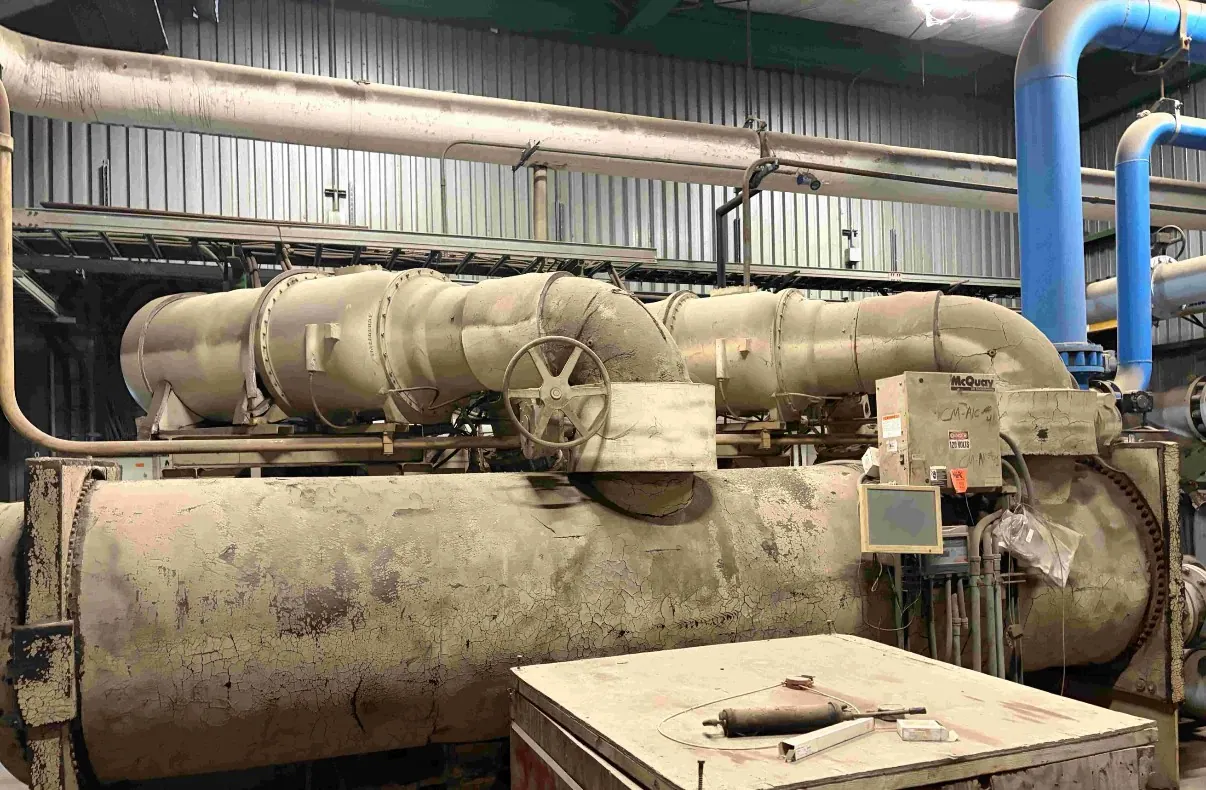
We buy university campus chillers in San Antonio, Texas, with cash offers and upfront payment when a purchase is agreed. We handle removal, and the seller does not need to test the equipment.
From first photo to final haul, we take care of the details so you can move forward.
Share a nameplate photo, the location, and whatever you know about your equipment. No testing is required from you.
We review the chiller and your site information, then make an offer. Payment is upfront.
We handle disconnects, refrigerant recovery, crane and rigging, loading, freight and hauling.
A university chiller sale has two separate permissions to sort out: who is authorized to sell the equipment, and who can approve the crew’s access to the campus and work area. Those roles may sit with one person or involve a facilities representative, procurement staff, a project manager, or another authorized contact. Establishing both early helps prevent a reviewed asset from reaching a pickup date that the site cannot approve.
If a contractor is coordinating a plant change, clarify whether that contractor can approve the sale or only arrange the work. The equipment owner or its authorized representative must agree to the transaction; the campus contact must also confirm access, site rules, and any required approvals. Share the names or roles of the people who will handle those decisions, without assuming that one approval covers both.
We buy used university and other commercial or industrial chillers, including water-cooled and air-cooled centrifugal, screw, and scroll equipment. Units are generally considered from 20 to 2,000-plus cooling tons, and all refrigerants are considered. Idle and non-running machines can be reviewed too. A cooling ton measures capacity, not the machine’s weight or the lifting requirement.
For an initial review, send the identification plate if it is safely visible, plus clear photos of the chiller, its immediate surroundings, and any included components or controls. Note the building or plant area, whether the unit is operating, idle, or non-running, and what is known about its history. If a label is unreadable or a detail is unknown, say so rather than estimating. Do not start the machine or open its refrigerant circuit to gather information.
Campus pickup planning follows the machine from its present position to a place where it can be loaded. Relevant details may include stairs or level changes, door and corridor clearances, overhead obstructions, outdoor staging space, vehicle access, and the distance to a suitable loading area. If the chiller is on a roof or below grade, describe the access and any known restrictions. Photos from several points along the route are more useful than a single close-up.
University sites may have controlled entrances, escort requirements, scheduled work windows, occupied buildings, or restrictions on vehicle movement. These conditions vary by property, so provide the actual procedures and constraints that apply. If classes, events, research activity, or other work affect timing, identify the relevant dates or periods. A crane, specialized rigging, or a particular freight arrangement may be needed, but that depends on the machine and the verified site conditions.
Before scheduling, identify the authorized site contact who can grant access on the day, confirm the approved work area, explain applicable safety and property rules, and coordinate with facilities staff. Let us know whether a campus escort or advance appointment is required, which entrance and staging area may be used, and who can address questions about utilities or nearby equipment. If a replacement project is underway, distinguish the outgoing chiller from equipment or connections that must remain in service.
We coordinate appropriate refrigerant recovery with qualified personnel, disconnects, rigging, crane work when needed, loading, freight, and hauling. The removal plan is based on the agreed asset and actual project review. Our team handles the equipment work; the seller or site does not need to test, run, repair, restart, recover refrigerant, arrange a crane, or hire a hauler. The site does need to provide accurate information, authorized access, applicable rules, and necessary approvals. Never vent refrigerant or open the circuit to prepare for pickup.
A cash offer depends on the chiller and the work required to collect it, including condition, configuration, refrigerant information, access, and transport needs. An offer is subject to review and is not guaranteed. No particular amount can be inferred from tonnage alone, especially because capacity says nothing about the equipment’s physical weight or the difficulty of removing it.
If a purchase is agreed, payment is made upfront before pickup, on the terms agreed with the authorized seller. Confirm which chiller and accessories are included, who can approve the transaction, and the planned collection window before work is scheduled. This keeps the sale scope aligned with the site’s access approval and removal plan.
Gather the available nameplate details, photographs, known condition, refrigerant information if known, and a short description of the chiller’s location and route out of the building. Include any campus access requirements, timing limits, and the roles of the people authorized to approve the sale and the pickup. Then submit those details for review. Missing information is not a reason to test or dismantle the machine; explain what is unavailable, and the remaining questions can be addressed as the project is assessed.

Air-cooled or water-cooled. Centrifugal, screw or scroll. From single units to large shutdown projects, we buy industrial chillers across Texas.
Send us your chiller details and nameplate photos for a cash offer. Don’t worry if you don’t know every specification—we can start with what you have.
Call or text(614) 715-3047TEXT NAMEPLATE PHOTOS ↗Prefer email?
saleselectricalbuyers@gmail.com