
SEND THE DETAILS
Share a nameplate photo, the location, and whatever you know about your equipment. No testing is required from you.
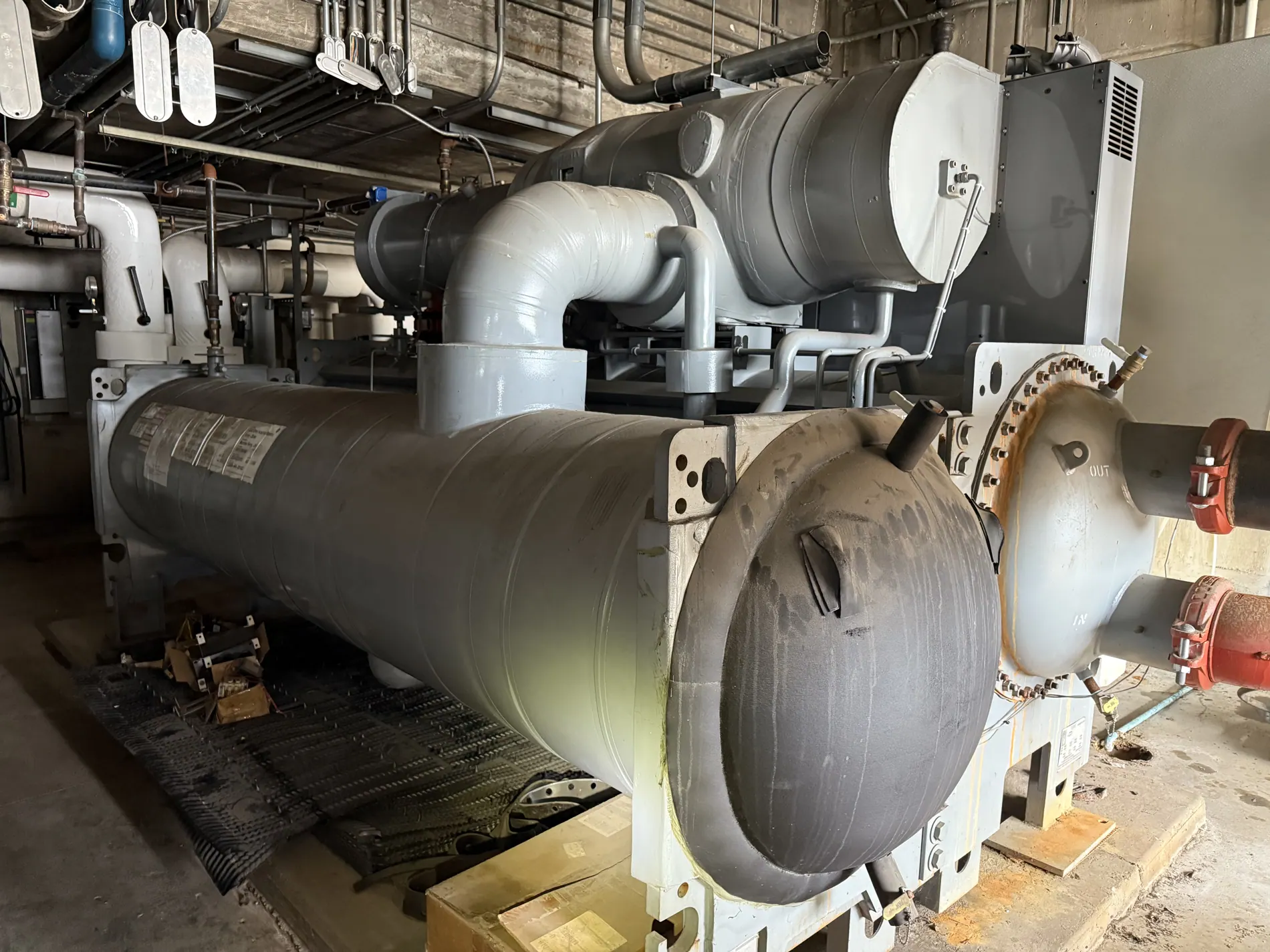
We buy Trane chillers in Texas for projects involving non-running equipment. We offer upfront payment, handle removal, and do not require seller testing.
From first photo to final haul, we take care of the details so you can move forward.
Share a nameplate photo, the location, and whatever you know about your equipment. No testing is required from you.
We review the chiller and your site information, then make an offer. Payment is upfront.
We handle disconnects, refrigerant recovery, crane and rigging, loading, freight and hauling.
A non-running Trane chiller can still be worth reviewing. It may be idle after a plant change, awaiting repair, partly dismantled, or simply no longer needed; you do not need to settle its cause of failure before asking about a sale. We buy used industrial and commercial chillers in Texas, including Trane units, and consider equipment that is operating, idle, or non-running. A purchase is subject to review of the particular asset and removal project.
For an initial review, share the nameplate information if it is readable, a few overall photographs, and what you know about the chiller’s present condition. Mention missing components, accessories included in the sale, and any known service history. If the identification plate is hard to reach, do not put yourself at risk to photograph it; explain what information is unavailable.
We generally consider chillers from about 20 to more than 2,000 cooling tons, across centrifugal, screw, and scroll designs. A cooling ton is a measure of capacity, not the unit’s physical weight. For a removal plan, the actual model, dimensions, weight information if available, configuration, and route out of the building matter more than capacity alone.
Do not assume the Trane name or a capacity figure establishes the machine’s age, contents, completeness, or value. We consider all refrigerants, but the refrigerant stated on a label may not confirm what is currently in the circuit. Share known changes or records rather than guessing. Leave closed refrigerant circuits closed: do not vent refrigerant or open the system to prepare it for review.
A chiller may still be connected to electrical service, water piping, controls, or other plant equipment. Tell us what remains connected and what nearby equipment or services must stay in operation. The proper isolation points and sequence depend on the installation; they should be coordinated before removal with the authorized site contact and relevant facility personnel.
You do not need to test, restart, repair, or disconnect the chiller to request consideration. If refrigerant recovery is required, we arrange and handle it with qualified personnel. We also coordinate the agreed disconnects and equipment work. Do not attempt recovery yourself, and do not treat a non-running machine as empty or safe to open.
Useful access details go beyond the equipment-room door. Describe the path from the chiller’s current position to the loading point, including stairs, ramps, corridors, doors, overhead clearances, and any known floor or structural limits. Photographs of the route can help show constraints that a model number cannot. If weight or dimensions are unknown, say so rather than estimating.
Conditions differ from one Texas facility to another. A unit on an outdoor pad may have a straightforward path; an indoor installation could require a crane, specialized rigging, a planned work window, or coordination around occupied areas. Shared docks, restricted hours, security procedures, or active building services may affect scheduling if they apply. We assess the actual site rather than assuming a standard pickup arrangement.
We arrange and handle appropriate refrigerant recovery, disconnects, rigging, crane work when needed, loading, freight, and hauling for the agreed removal scope. The seller or site representative supplies accurate equipment and access information, identifies applicable site rules, and obtains necessary approvals. The authorized contact also coordinates entry and communicates requirements such as escorts, orientations, permits, or approved work hours when the property requires them.
Before pickup, confirm which chiller and related components are included, the access plan, the removal scope, and the timing with the people authorized to approve the work. If a route, connection, or site condition is uncertain, raise it early. That makes it easier to determine whether the proposed handling plan fits the facility without asking the seller to perform the equipment work.
A cash offer depends on the equipment and the real project details, including its known condition, configuration, completeness, and the work needed to collect it. An offer is not guaranteed, and tonnage alone cannot establish a purchase amount. If a purchase is agreed, payment is made upfront before pickup on the terms agreed with the seller.
To begin, gather the identification details and photographs you can safely provide, describe the known condition, and outline the connections and route to the loading area. Add any site restrictions or approval requirements already known. That information gives us a practical basis to review the Trane chiller, discuss the removal scope, and explain the next step—without running or repairing the machine first.

Air-cooled or water-cooled. Centrifugal, screw or scroll. From single units to large shutdown projects, we buy industrial chillers across Texas.
Send us your chiller details and nameplate photos for a cash offer. Don’t worry if you don’t know every specification—we can start with what you have.
Call or text(614) 715-3047TEXT NAMEPLATE PHOTOS ↗Prefer email?
saleselectricalbuyers@gmail.com