
SEND THE DETAILS
Share a nameplate photo, the location, and whatever you know about your equipment. No testing is required from you.
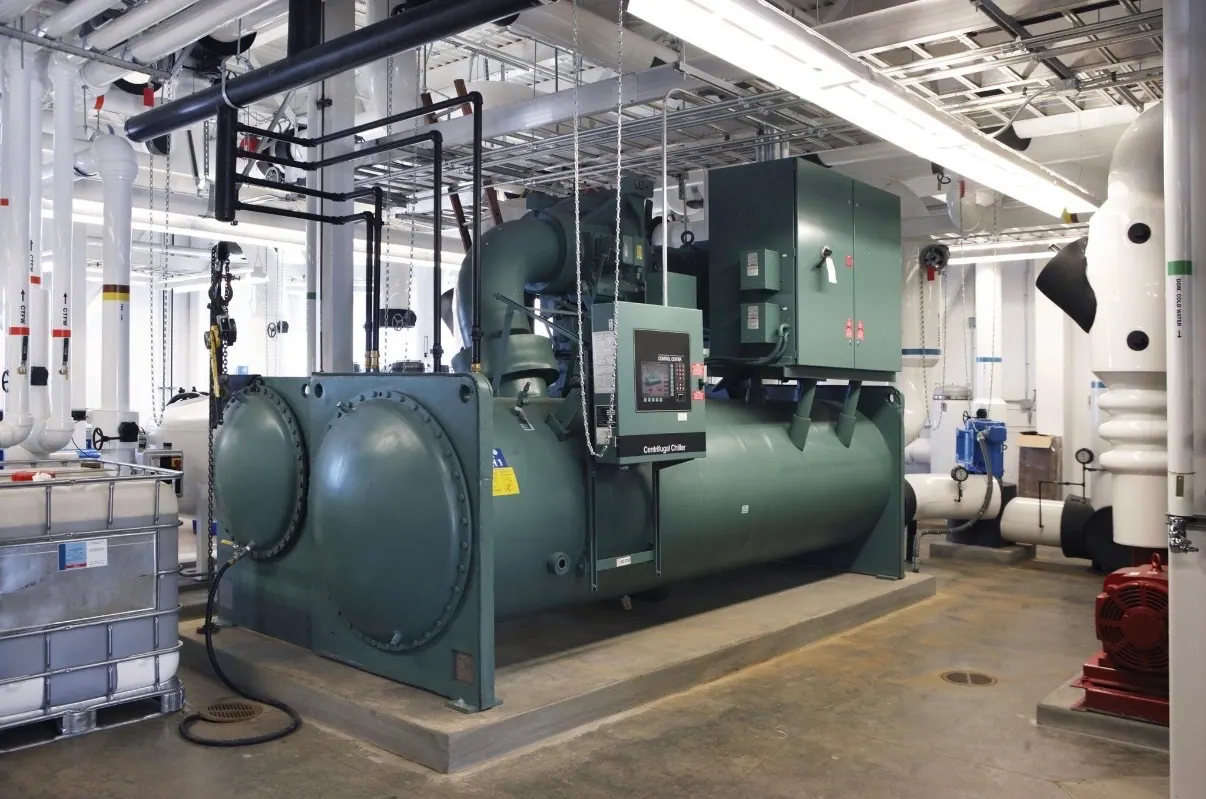
We buy chillers under 100 tons in Beaumont, Texas, with cash offers and upfront payment when a purchase is agreed. We handle removal, and the seller does not need to test the equipment.
From first photo to final haul, we take care of the details so you can move forward.
Share a nameplate photo, the location, and whatever you know about your equipment. No testing is required from you.
We review the chiller and your site information, then make an offer. Payment is upfront.
We handle disconnects, refrigerant recovery, crane and rigging, loading, freight and hauling.
If a replacement project, renovation, or equipment consolidation is approaching in Beaumont, an under-100-ton chiller can be part of the schedule even if it is a relatively compact unit. Decide which machine is being offered, who can authorize its sale, and when the space needs to be clear. We buy used industrial and commercial chillers, including smaller-capacity units, subject to review of the equipment and removal project. A purchase is not automatic, so it is useful to start the conversation before the new installation leaves little room to plan.
You do not have to get the chiller running, repaired, or disconnected to request a review. Idle and non-running equipment is considered. The first step is to share what is known and flag any firm dates, access limits, or other work that could affect collection. If a purchase is agreed, payment is made upfront before pickup, under the terms agreed with the seller.
A cooling capacity below 100 tons is a useful starting description, but it does not establish how heavy the machine is or how it can be removed. If available, provide the nameplate information, manufacturer and model, refrigerant type, approximate dimensions, and any known operating or maintenance history. A clear photo of the data plate can help; do not open a panel or circuit to obtain information.
Include wide photographs showing the whole unit and its surroundings, along with close views of visible damage, missing components, or modifications. If the plate is unreadable or records are incomplete, say so rather than estimating. We consider different configurations and refrigerants, but the specific machine and its condition still need review. Any known charge or refrigerant information is helpful; the seller should not vent refrigerant or open the circuit.
Before agreeing on the scope and collection window, describe how the chiller sits and how a crew could reach it. A unit in a mechanical room may need to pass through doors and corridors; one outdoors may have a different loading route. Note stairways, tight turns, overhead obstructions, nearby piping, floor or ground conditions, and truck access where they apply. Measurements and photos are more useful than assuming that a small-tonnage chiller will be easy to move.
Also identify what cannot be blocked during the work. Active plant equipment, occupied rooms, shared service corridors, operating hours, escorts, permits, or site-specific safety procedures may affect the sequence, depending on the property. An authorized site contact can explain the rules and identify the approved work area. These details help establish what access is available; they do not replace a review of the actual route and equipment.
Tell us whether removal must happen before a replacement is set, before a lease or property handover, or within another project milestone. If the schedule is still flexible, say that too. Collection timing should be agreed after the equipment, work area, access, and required handling are understood—not assumed from the chiller’s capacity alone.
Where other contractors are involved, note who controls the area and how work will be coordinated. The site should provide accurate information, authorized access, applicable site rules, and necessary approvals. We arrange the chiller-side work and coordinate with the authorized contact so the agreed scope and timing are clear before pickup.
Refrigerant and utility connections need appropriate handling before a chiller is moved. We arrange and handle refrigerant recovery with qualified personnel, along with disconnects, rigging, crane work when needed, loading, freight, and hauling. The plan depends on what is actually installed and the access available. The seller does not need to hire a recovery contractor, crane, or hauler as a condition of asking us to review the equipment.
Do not restart, test, repair, disconnect, or open the chiller’s refrigerant circuit for this process. Leave equipment work to the responsible removal team and qualified personnel. If utilities remain connected, or if their status is uncertain, report that to the site contact and include it in the information shared for review; do not assume they are safe to handle.
A cash offer depends on the specific asset and the project review, including known condition, configuration, and the practical removal scope. It is not guaranteed before that review. If the parties agree to a purchase, payment is made upfront before pickup on the agreed terms. Confirm the equipment included in the sale, who has authority to approve it, the payment arrangement, and the collection window before work is scheduled.
To begin, gather the identification details and photographs you can safely provide, note known condition and refrigerant information, and describe the route and any project deadlines. Share those details with the buyer for review. You do not need to prepare the machine for a test or organize its removal before taking that first step.

Air-cooled or water-cooled. Centrifugal, screw or scroll. From single units to large shutdown projects, we buy industrial chillers across Texas.
Send us your chiller details and nameplate photos for a cash offer. Don’t worry if you don’t know every specification—we can start with what you have.
Call or text(614) 715-3047TEXT NAMEPLATE PHOTOS ↗Prefer email?
saleselectricalbuyers@gmail.com