
SEND THE DETAILS
Share a nameplate photo, the location, and whatever you know about your equipment. No testing is required from you.
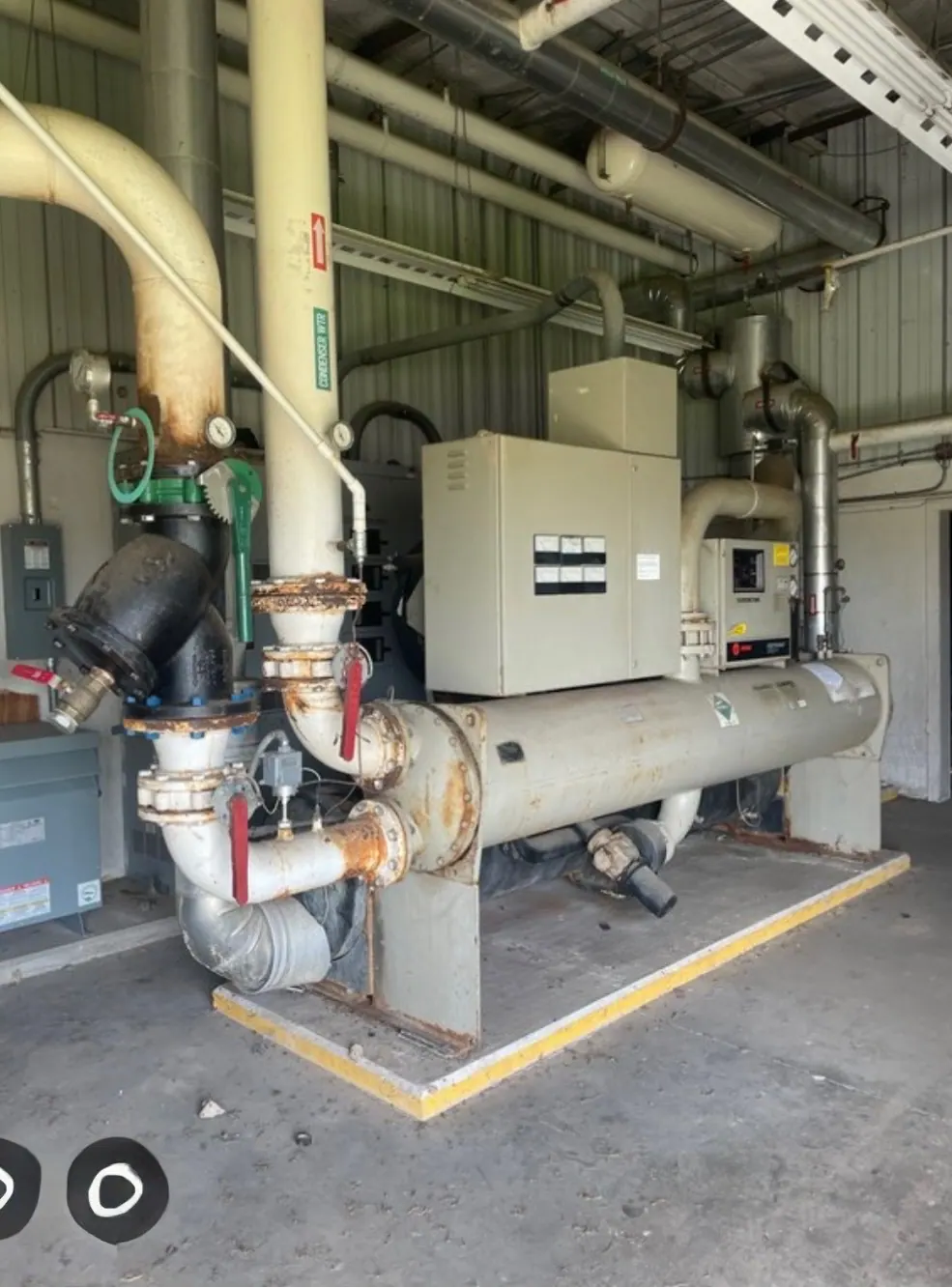
We buy chillers from facility closures in Texas, with cash offers and upfront payment when a purchase is agreed. We handle removal, and the seller does not need to test the equipment.
From first photo to final haul, we take care of the details so you can move forward.
Share a nameplate photo, the location, and whatever you know about your equipment. No testing is required from you.
We review the chiller and your site information, then make an offer. Payment is upfront.
We handle disconnects, refrigerant recovery, crane and rigging, loading, freight and hauling.
When a Texas facility is closing, a chiller can sit on the critical path between the last day of operations and the next use of the property. It may need to be sold and removed while other equipment, records, or building systems are still being handled. Begin by identifying the date the area must be cleared, who can authorize work, and whether the chiller is available as-is or subject to a broader property plan.
We buy used industrial and commercial water-cooled and air-cooled chillers from facility closures. Centrifugal, screw, and scroll units are considered, generally from 20 to 2,000+ cooling tons, and all refrigerants are considered. Idle and non-running machines may also be reviewed. A purchase is subject to the equipment and removal scope being assessed; the size or type alone does not establish an offer.
Closure work can leave uncertainty about what stays with the building. Mark the chiller in photos and describe any accessories proposed for sale, such as controls or attached components. Note nearby pumps, piping, electrical gear, or other machines that are not included. A clear boundary helps keep the equipment under review consistent with the equipment that may later be removed.
Share the manufacturer and model if visible, serial or nameplate details, cooling capacity if known, and current photos from several angles. Include an image showing how the machine sits in the room or plant area. If records are missing, do not guess at specifications: send what is available and identify what remains unknown.
Before agreeing on a collection window, establish the path from the chiller to the loading point. Door and corridor clearances, floor changes, overhead obstructions, stairs, shared loading areas, and the distance to an exterior exit may affect the work plan. Tell us whether appointments, escorts, restricted hours, or temporary access controls apply. These details should be checked at the actual site rather than inferred from the equipment photographs.
Where the building is partly occupied or other systems remain in service, identify what must stay accessible or operational. The closure team may need to preserve routes, protect adjacent equipment, or limit work to a defined area. Share applicable site rules and approvals early so the pickup plan can be coordinated with the authorized contact and the property’s schedule.
A stored or non-running chiller can be considered without a seller-run test. Report what you know: whether it was recently operating, when it was taken out of service, whether parts are missing, and whether there is visible damage or a known service issue. If the history is uncertain, say so. You do not need to repair, restart, or arrange testing to request a review.
Do not open the refrigerant circuit or vent refrigerant. A machine may retain a charge even after it has stopped operating, and its present condition cannot be confirmed from age or appearance alone. We arrange appropriate refrigerant recovery with qualified personnel as part of the agreed equipment work. The site contact can explain any known restrictions on work around connected utilities or surrounding systems.
Equipment work may include recovery, disconnects, rigging, crane work if needed, loading, freight, and hauling. The actual arrangement depends on the chiller, access, surroundings, and the approvals available at the property. We coordinate and handle the work covered by the agreed scope; the seller does not have to hire a separate recovery contractor, crane, or hauler as a condition of asking us to review the unit.
The authorized site representative supplies accurate information, approved access, site rules, and necessary approvals. Let us know who can confirm the work window and whether a property manager, closure lead, or other representative must be involved. A cooling-ton rating describes capacity, not shipping weight, so handling decisions need equipment and site information rather than tonnage alone.
A cash offer depends on the specific asset and the removal job after review; it is not guaranteed. If a purchase is agreed, the amount, equipment included, access plan, and other terms are settled in advance. Payment is made upfront before pickup on those agreed terms. That sequence lets the seller plan the handoff without relying on an assumed value or an unconfirmed collection date.
To begin, gather the identification you can find, current photographs, known condition and operating history, the closure or clearance deadline, and a short description of access to the loading point. State plainly which items are included and which must remain. If some information is unavailable, flag it instead of delaying the inquiry. We can review the available details, clarify the open questions, and determine whether the equipment and site scope are suitable for an offer and coordinated removal.

Air-cooled or water-cooled. Centrifugal, screw or scroll. From single units to large shutdown projects, we buy industrial chillers across Texas.
Send us your chiller details and nameplate photos for a cash offer. Don’t worry if you don’t know every specification—we can start with what you have.
Call or text(614) 715-3047TEXT NAMEPLATE PHOTOS ↗Prefer email?
saleselectricalbuyers@gmail.com