
SEND THE DETAILS
Share a nameplate photo, the location, and whatever you know about your equipment. No testing is required from you.
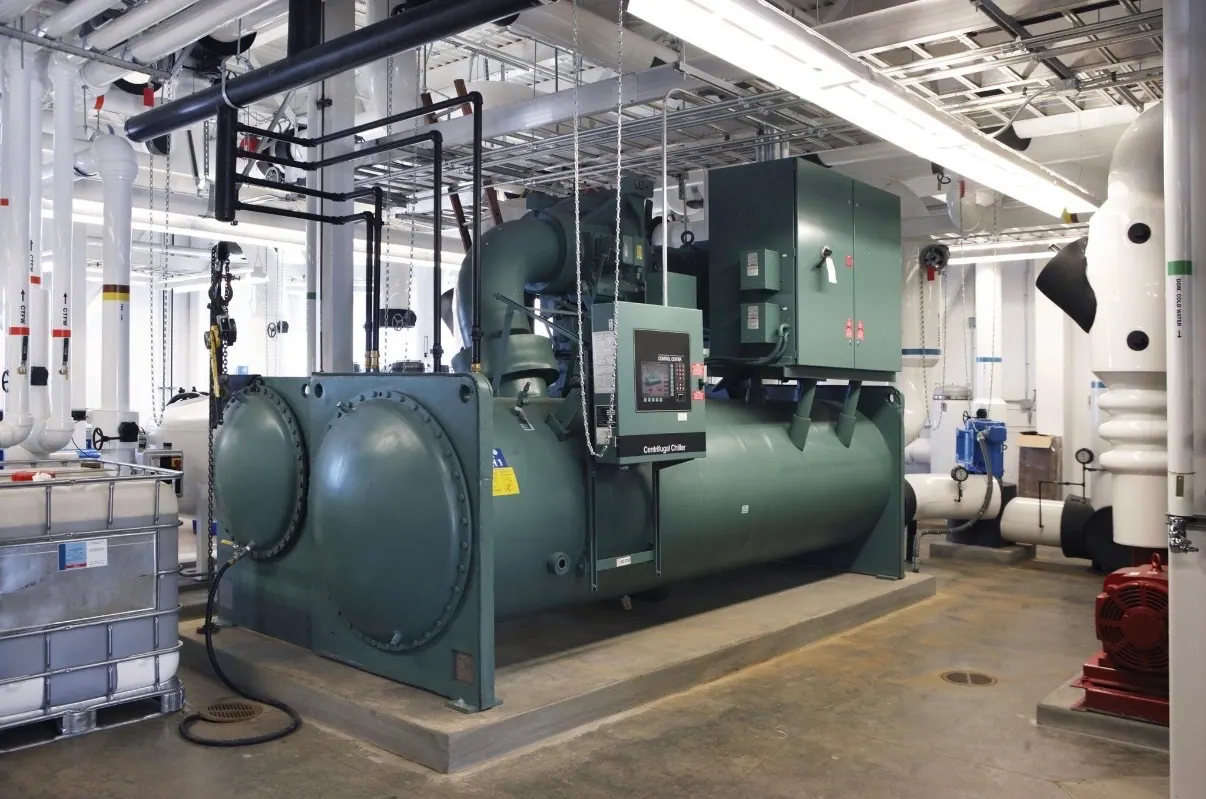
We buy screw chillers in Midland, Texas, with cash offers and upfront payment when a purchase is agreed. We handle removal, and the seller does not need to test the equipment.
From first photo to final haul, we take care of the details so you can move forward.
Share a nameplate photo, the location, and whatever you know about your equipment. No testing is required from you.
We review the chiller and your site information, then make an offer. Payment is upfront.
We handle disconnects, refrigerant recovery, crane and rigging, loading, freight and hauling.
A screw chiller can be worth reviewing even when its operating history is incomplete. Records may not show the last run date, service work, refrigerant details, or why the unit was taken out of use. You do not need to fill those gaps by guessing. Describe what you know, identify anything uncertain, and share the information already available.
We buy used industrial and commercial screw chillers in Midland, Texas, including idle and non-running units. We consider equipment across a broad range of capacities and refrigerants, but a purchase is not automatic: any cash offer depends on review of the actual chiller and removal project. You do not need to restart, test, repair, or clean the equipment just to have it considered.
Photos and basic identification help establish what is being offered. If convenient, send a readable nameplate image, views of the complete assembly, and close-ups of visible labels, compressor sections, control panels, or apparent damage. Add the make, model, serial number, and capacity if you can read them; don’t infer details that the tag does not confirm.
Briefly note whether the chiller is connected, stored, partly dismantled, or missing components, and whether anything is known about its last operation. If the records are sparse or the unit cannot be safely inspected, say so. That is more useful than arranging an unauthorized startup or opening a refrigerant circuit. A cooling ton measures capacity; it is not the machine’s weight, so lifting plans require separate equipment information.
A screw compressor’s condition matters, but so do completeness, identification, controls, and the work needed to collect the assembly. A unit that has sat idle may need a different review from one recently removed from service. Neither circumstance by itself establishes whether a purchase will be agreed. The actual scope and available evidence guide the decision.
Tell us about known leaks, damaged panels, disconnected wiring, removed components, or uncertain refrigerant charge if that information is available. Do not touch or alter a system to produce an answer. If a detail cannot be verified without disturbing equipment or facility operations, leave it for the project review and the qualified personnel handling the work.
Pickup planning starts with where the chiller sits and how it could reach a loading area. Is it indoors or outdoors? Are there doors, low clearances, stairs, a roof location, narrow service corridors, or other obstacles? Photos of the route can be as helpful as close-ups of the machine. If the unit is in a basement or elevated area, note the access openings and any freight route that may be available.
Share known restrictions on floor loading, lift access, work hours, truck staging, gates, or routes used by other people. If measurements or structural limits are not known, identify that uncertainty rather than estimating. Actual dimensions, verified weight, site rules, and the available working space determine what equipment and handling sequence may be appropriate.
Refrigerant handling and utility isolation need to fit the system and the facility’s procedures. We arrange and handle appropriate refrigerant recovery with qualified personnel, along with necessary disconnects, coordinated with the authorized site contact. Do not vent refrigerant, open the circuit, or arrange a test run for the purpose of requesting an offer.
The seller or site representative supplies accurate information, confirms authority to release the equipment, explains applicable rules, and obtains necessary approvals. Tell us about adjacent equipment, shared lines, restricted areas, or operating systems that could affect access. The removal work must be planned around the actual installation; no facility layout or refrigerant status should be assumed in advance.
If we agree to purchase the chiller, payment is made upfront before pickup on the agreed terms. The scope should identify the equipment included and clarify access and removal arrangements before work is scheduled. We handle the equipment work, including rigging, crane work when needed, loading, freight, and hauling, with timing coordinated through the authorized site contact.
A cash offer is subject to review, not a guaranteed result. Condition, completeness, identification, recovery needs, and physical access can all affect whether a project can proceed and on what terms. Sharing constraints early helps prevent a mismatch between the equipment discussed and the equipment available for pickup.
Gather the clearest nameplate and equipment photos you can take safely, then add a short note about known condition, missing records, current location, and the route to a loading area. Include uncertainties plainly. With that information, the chiller and removal scope can be reviewed without asking you to run, repair, disconnect, or handle refrigerant in advance.

Air-cooled or water-cooled. Centrifugal, screw or scroll. From single units to large shutdown projects, we buy industrial chillers across Texas.
Send us your chiller details and nameplate photos for a cash offer. Don’t worry if you don’t know every specification—we can start with what you have.
Call or text(614) 715-3047TEXT NAMEPLATE PHOTOS ↗Prefer email?
saleselectricalbuyers@gmail.com