
SEND THE DETAILS
Share a nameplate photo, the location, and whatever you know about your equipment. No testing is required from you.
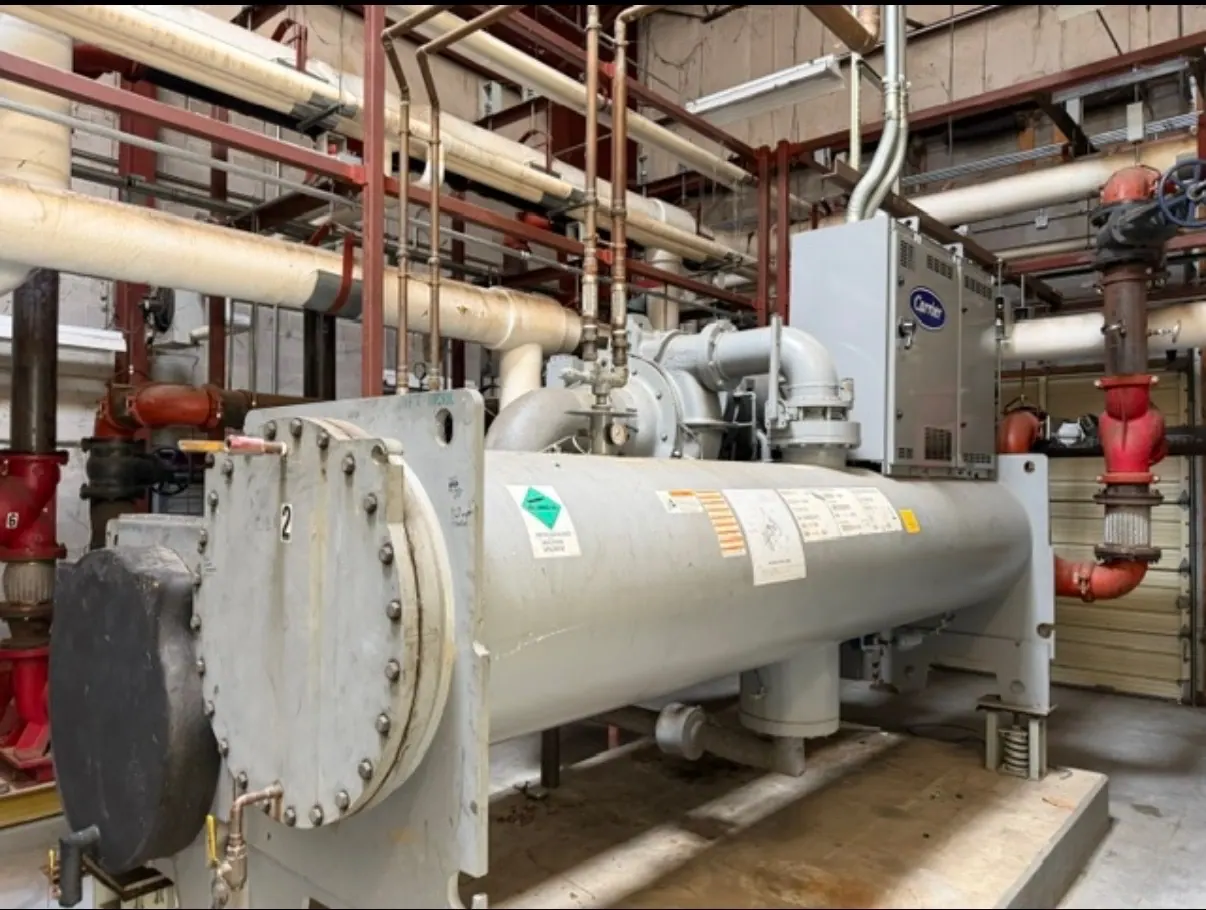
We buy chillers requiring rooftop removal in Corpus Christi, Texas, with cash offers and upfront payment when a purchase is agreed. We handle removal, and the seller does not need to test the equipment.
From first photo to final haul, we take care of the details so you can move forward.
Share a nameplate photo, the location, and whatever you know about your equipment. No testing is required from you.
We review the chiller and your site information, then make an offer. Payment is upfront.
We handle disconnects, refrigerant recovery, crane and rigging, loading, freight and hauling.
You do not need to restart, repair, test, disconnect, or open the refrigerant circuit of a rooftop chiller before asking us to review it. We buy used industrial and commercial chillers, including equipment that is idle or not running. For a first look, the most useful details are the unit’s identification, what is known about its condition, and how it is positioned on the roof.
Send whatever information is already available: a photograph of the nameplate, overall views of the chiller, and a brief note about whether it is operating, shut down, or of unknown status. If the plate is hard to reach, do not put anyone at risk to photograph it; describe the model or capacity if known. Include the refrigerant type only if it is documented or readily visible in existing records. We consider all refrigerants, but you should not vent refrigerant or open the system to identify it.
We review water-cooled and air-cooled machines, including centrifugal, screw, and scroll chillers, generally from 20 to 2,000-plus cooling tons. The cooling-ton figure measures capacity; it does not tell us the machine’s lifting weight. That distinction matters when planning a rooftop removal, so do not use capacity as a substitute for verified handling information.
A rooftop pickup depends on the actual installation. Helpful photos show the chiller in relation to roof edges, nearby equipment, parapets, access doors, and any visible route toward a loading or staging area. If you know the building height or how equipment has previously been lifted, share that information, while noting what is confirmed and what is only an estimate.
Crane placement and rigging cannot be settled from a rooftop photo alone. Depending on the property, the plan may need to account for overhead lines, limited setup space, ground bearing conditions, traffic or pedestrian controls, restricted access, or a route that crosses an active work area. The appropriate method is determined from the actual site and equipment rather than assumed in advance.
Identify the chiller being offered and distinguish it from equipment that must remain. Mention any included control panels, pumps, or other components only if they are part of the proposed sale; do not assume connected equipment is included. If the unit is one part of a larger surplus project, a simple list of items under consideration helps establish the scope.
Condition details can be brief and candid. Note known leaks, missing parts, corrosion, damage, prior removal attempts, or long periods out of service. If records are incomplete, say what is unknown. Salt-air exposure may affect outdoor equipment in coastal settings, but the degree of exposure and any resulting condition need to be assessed on the particular machine, not inferred from its location alone.
Rooftop work at an operating property may require a defined work window, escorts, permits, badging, or advance notice to building staff. If any of those rules apply, share them early and identify the person authorized to approve access and the work boundaries. Also point out nearby systems or services that must not be interrupted. These details let the removal plan account for the facility instead of treating the roof as an isolated work area.
We arrange and handle appropriate refrigerant recovery with qualified personnel, utility disconnects, rigging, crane work when needed, loading, freight, and hauling. The seller is not expected to hire a recovery contractor or organize a crane or hauler. The work is coordinated with the authorized site contact, who supplies accurate information, access under site rules, and necessary approvals. The exact sequence depends on the chiller and installation.
A cash offer depends on the asset and a review of the actual project, including the equipment information and rooftop removal requirements. An initial conversation is not a guaranteed offer or commitment to purchase. If the purchase is agreed, payment is made upfront before pickup, on the terms agreed with the seller.
Before work is scheduled, the parties can confirm which equipment is included, who may authorize the sale, the access arrangements, and the planned pickup window. If an approval, site restriction, or equipment detail is still unresolved, flag it rather than assuming it can be handled on the day of removal.
To begin, assemble the identification photo if available, several views of the rooftop unit and access route, known condition and refrigerant information, and a short description of the site’s access rules. State plainly when a fact is unknown. That gives us a practical basis to review the chiller and removal scope without asking you to run it, repair it, or prepare it for lifting. After reviewing what you provide, we can discuss whether the equipment and project are suitable for an offer and what information is needed next.

Air-cooled or water-cooled. Centrifugal, screw or scroll. From single units to large shutdown projects, we buy industrial chillers across Texas.
Send us your chiller details and nameplate photos for a cash offer. Don’t worry if you don’t know every specification—we can start with what you have.
Call or text(614) 715-3047TEXT NAMEPLATE PHOTOS ↗Prefer email?
saleselectricalbuyers@gmail.com