
SEND THE DETAILS
Share a nameplate photo, the location, and whatever you know about your equipment. No testing is required from you.
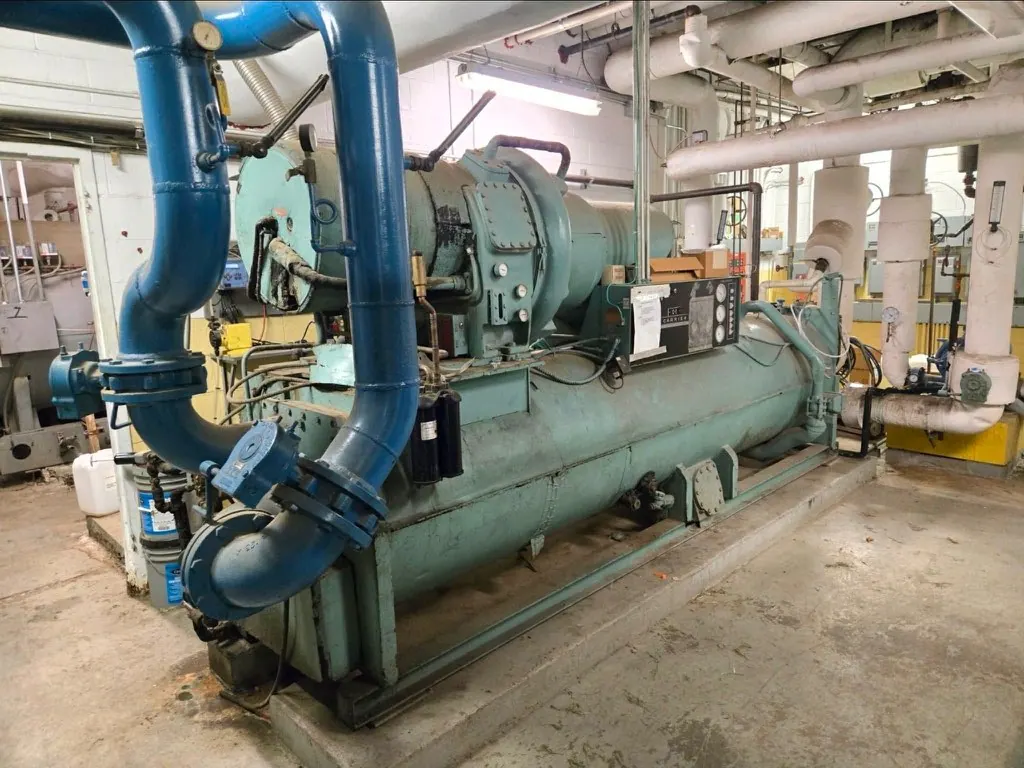
We buy chillers marked R-410A in Midland, Texas, with cash offers and upfront payment when a purchase is agreed. We handle removal, and the seller does not need to test the equipment.
From first photo to final haul, we take care of the details so you can move forward.
Share a nameplate photo, the location, and whatever you know about your equipment. No testing is required from you.
We review the chiller and your site information, then make an offer. Payment is upfront.
We handle disconnects, refrigerant recovery, crane and rigging, loading, freight and hauling.
A chiller marked R-410A can be reviewed without restarting it or opening its refrigerant circuit. For a first assessment, share the information already available: photographs of the machine, its identification plate, and the refrigerant marking. If a label is damaged or a detail is uncertain, say so rather than trying to verify it yourself.
We buy used industrial and commercial water-cooled and air-cooled chillers, including units marked R-410A. Centrifugal, screw, and scroll equipment is considered, generally from 20 to 2,000-plus cooling tons. We also consider idle and non-running machines. An offer depends on review of the actual equipment and removal project; not every unit will be purchased.
Useful details may include the manufacturer and model, approximate age if known, configuration, and any components included with the chiller. A wide photograph can show the complete assembly, while closer images may make a nameplate and refrigerant label easier to read. Note visible damage, missing parts, prior modifications, or known service history, but there is no need to diagnose a fault.
If the chiller has not run recently, simply report that. Do not run, repair, clean, or restart it to prepare for review. If its refrigerant charge or service history is unknown, identify that uncertainty. Never vent refrigerant or open the circuit to check what is inside.
The removal plan depends partly on the machine’s location and route out. Is it outdoors, in a mechanical room, on a roof, or stored elsewhere on the property? Photos of the surrounding area, access doors, and likely path toward a loading point can help explain the setting. Where available, approximate doorway or corridor dimensions are useful; do not put yourself at risk to measure them.
Also share practical site information: whether the facility is occupied, who can authorize access, any required escort or orientation, and relevant work-hour or loading restrictions. If other equipment or active operations are nearby, flag them. Access, clearances, overhead obstructions, staging space, and site rules may affect the sequence and equipment needed, so those details are confirmed for the actual job rather than assumed.
A cooling-ton rating describes refrigeration capacity; it does not tell us how heavy the chiller is or whether a particular route can accommodate it. If the machine’s dimensions or weight are available from records, share them as reference information. Handling is planned around the verified equipment, its condition, the lift and loading area, and site access—not tonnage alone. A crane may be needed for some removals, while other configurations may call for a different plan.
We coordinate and handle appropriate refrigerant recovery with qualified personnel, along with disconnects, rigging, crane work when needed, loading, freight, and hauling. The specific work and sequence depend on the equipment and site. You are not expected to hire a recovery contractor, arrange a crane, disconnect the chiller, or move it to an exit for an initial review.
Tell us which chiller is being offered and what, if anything, is included with it. If several machines or related items are involved, identify each one and distinguish sale equipment from items that must remain. Photos showing the group together and individual views can prevent confusion about the proposed scope. Mention known deadlines or preferred access windows, while recognizing that timing must be coordinated with the authorized site contact.
The seller or site representative supplies accurate available information, authorized access, applicable site rules, and necessary approvals. We handle the equipment-side removal work for a purchase that is agreed. If the property requires permits, advance notice, or a particular loading route, share those requirements early so the work can be reviewed with the appropriate contact.
An R-410A marking is one useful identification detail, not enough by itself to determine an offer. The review considers the actual unit, known condition, included components, access, and removal scope. After reviewing the information, we can discuss whether the project is suitable and whether a cash offer can be made. Any offer is subject to actual project review and is not guaranteed.
If a purchase is agreed, payment is made upfront before pickup, on the agreed terms. Confirm the seller’s authority to transfer the equipment, the precise items included, payment arrangements, and the planned access window before removal. The chiller does not need to be operating for you to begin that conversation.
Gather the clearest identification and location photos you can safely take, then add a short written note covering operating status, known history, included equipment, and access restrictions. Send what is available, mark unknown details as unknown, and identify the person authorized to coordinate site access. That gives the review a useful starting point without asking you to test the chiller or disturb its refrigerant system.

Air-cooled or water-cooled. Centrifugal, screw or scroll. From single units to large shutdown projects, we buy industrial chillers across Texas.
Send us your chiller details and nameplate photos for a cash offer. Don’t worry if you don’t know every specification—we can start with what you have.
Call or text(614) 715-3047TEXT NAMEPLATE PHOTOS ↗Prefer email?
saleselectricalbuyers@gmail.com