
SEND THE DETAILS
Share a nameplate photo, the location, and whatever you know about your equipment. No testing is required from you.
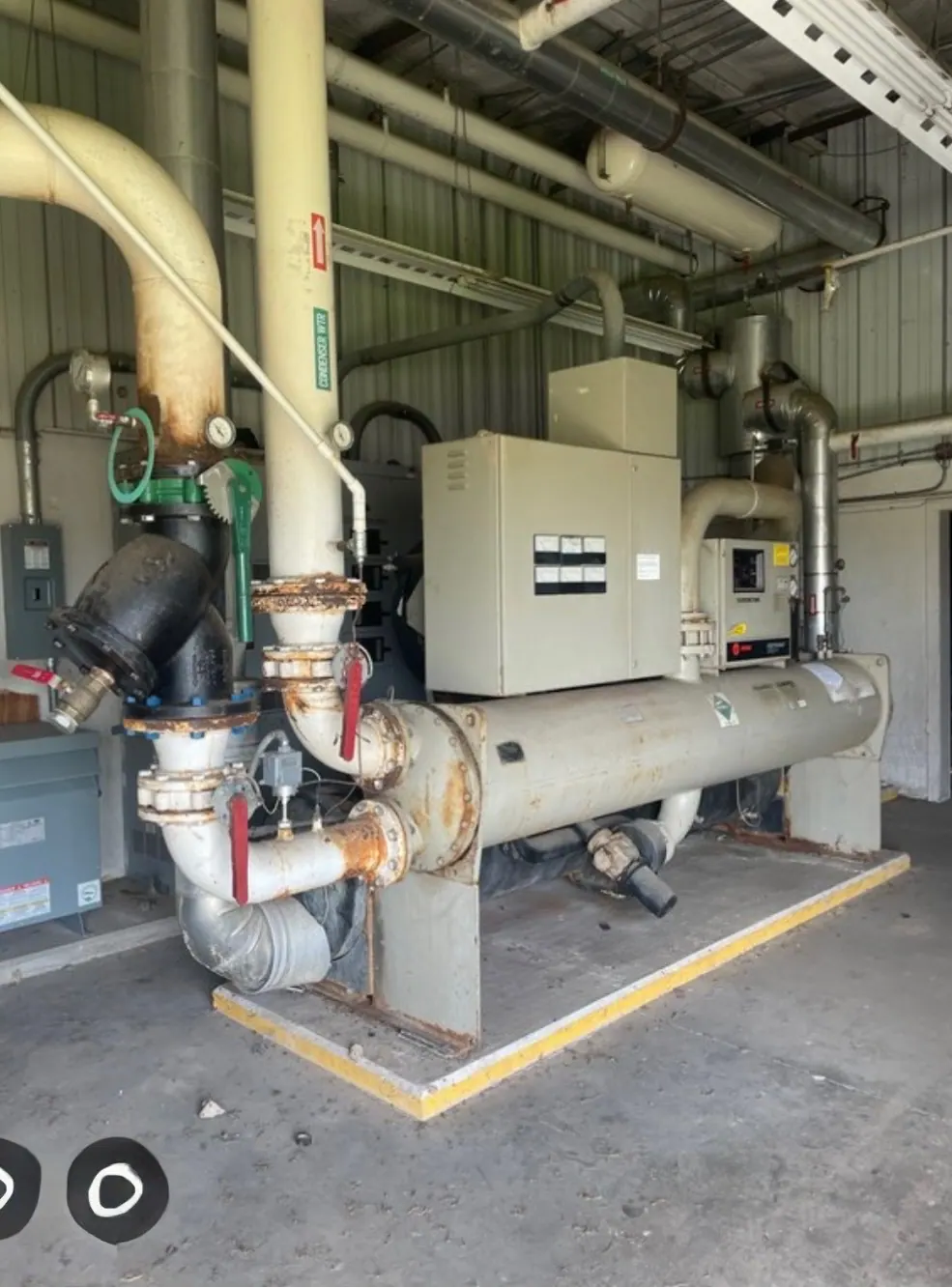
We buy district cooling plant chillers in Houston, Texas, with cash offers and upfront payment when a purchase is agreed. We handle removal, and the seller does not need to test the equipment.
From first photo to final haul, we take care of the details so you can move forward.
Share a nameplate photo, the location, and whatever you know about your equipment. No testing is required from you.
We review the chiller and your site information, then make an offer. Payment is upfront.
We handle disconnects, refrigerant recovery, crane and rigging, loading, freight and hauling.
A district cooling plant may serve several buildings or operate as part of a larger utility network. Before discussing a chiller, identify exactly which machine is available and what is not included. Pumps, piping, electrical gear, cooling towers, controls, and neighboring chillers may remain part of the plant. A simple equipment-room photo marked to show the offered unit can prevent confusion.
Tell us whether the unit is connected to shared systems and whether nearby equipment must remain in service. You do not need to prepare an engineering package to begin. Existing drawings, asset records, or photographs can help explain the boundary, but a clear description from the authorized plant contact is useful too.
Read the equipment nameplate if it is safely visible, or share an existing asset record. Helpful details may include manufacturer, model, serial number, approximate capacity, compressor type, and refrigerant. We consider water-cooled and air-cooled chillers, including centrifugal, screw, and scroll equipment, generally from 20 to more than 2,000 cooling tons, and consider all refrigerants.
Describe the known condition plainly: operating, idle, shut down, incomplete, or non-running. If the history is uncertain, say so rather than guessing. You do not need to restart the machine, arrange a performance test, repair a fault, or open the refrigerant circuit. A cooling-ton rating indicates capacity; it does not tell us the chiller’s lifting or shipping weight.
For a plant in Houston, the useful site details are the actual ones: indoor or outdoor location, floor or roof level, access openings, travel distance to a loading area, and any known restrictions on work hours. Mention fixed obstacles, overhead services, narrow turns, other operating equipment, or routes that staff must keep open if they apply. Photos from the chiller to the exit can make the route easier to assess.
If the unit is elevated, say what is known about the building height, staging area, and possible crane position. These are planning details, not a request for the seller to choose lifting equipment. The route, clearances, ground conditions, and site rules need review before a removal method is settled. A photograph or capacity rating alone cannot establish whether a lift is safe.
Where shared utilities or active plant systems are involved, identify who controls isolation and who can authorize access. Note any operating limits, scheduled outages, permit requirements, escort rules, or contractor coordination that are already known. The removal sequence must fit the real plant arrangement and the approvals required at that site; avoid disconnecting anything merely to prepare for an offer.
The site representative supplies accurate information, authorized access, applicable rules, and necessary approvals. We coordinate the equipment work with that authorized contact. If the sale covers only one chiller in a multi-unit plant, confirm which connections, accessories, or loose components are included before agreeing on scope.
Current charge, refrigerant type, and decommissioning history may not be known from a nameplate alone. Share records or observations already available, and identify uncertainties. Do not vent refrigerant or open the circuit. If a purchase is agreed, we arrange appropriate refrigerant recovery with qualified personnel and coordinate the necessary disconnects as part of the project.
Neither a seller-run recovery nor a test is a prerequisite to asking us to review the equipment. The work plan depends on the actual chiller, plant interfaces, access, and site requirements. If other units will stay in service, make that clear early so the proposed scope and work window can be coordinated accordingly.
We review the equipment information and the practical collection scope before discussing an offer. A cash offer depends on the asset and project review; it is not guaranteed. If we agree to buy the chiller, payment is made upfront before pickup, on agreed terms. Confirm the included equipment, payment terms, access arrangements, and pickup scope with the authorized seller before work begins.
For an agreed purchase, we handle appropriate recovery, disconnects, rigging, crane work when needed, loading, freight, and hauling. The method and sequence are coordinated for the equipment and site. The seller does not need to run, repair, or restart the machine. Share any known missing components or damage, since those details can affect the review and collection plan.
To move the discussion forward, gather whatever is readily available: a nameplate or asset-record photo, overall and access-route images, known condition, refrigerant information, and the name or role of the person authorized to coordinate the site. Add any known limits on access or work timing. You do not need to fill gaps by testing the chiller or preparing a formal survey; mark unknowns clearly, and the equipment and project scope can be reviewed from there.

Air-cooled or water-cooled. Centrifugal, screw or scroll. From single units to large shutdown projects, we buy industrial chillers across Texas.
Send us your chiller details and nameplate photos for a cash offer. Don’t worry if you don’t know every specification—we can start with what you have.
Call or text(614) 715-3047TEXT NAMEPLATE PHOTOS ↗Prefer email?
saleselectricalbuyers@gmail.com