
SEND THE DETAILS
Share a nameplate photo, the location, and whatever you know about your equipment. No testing is required from you.
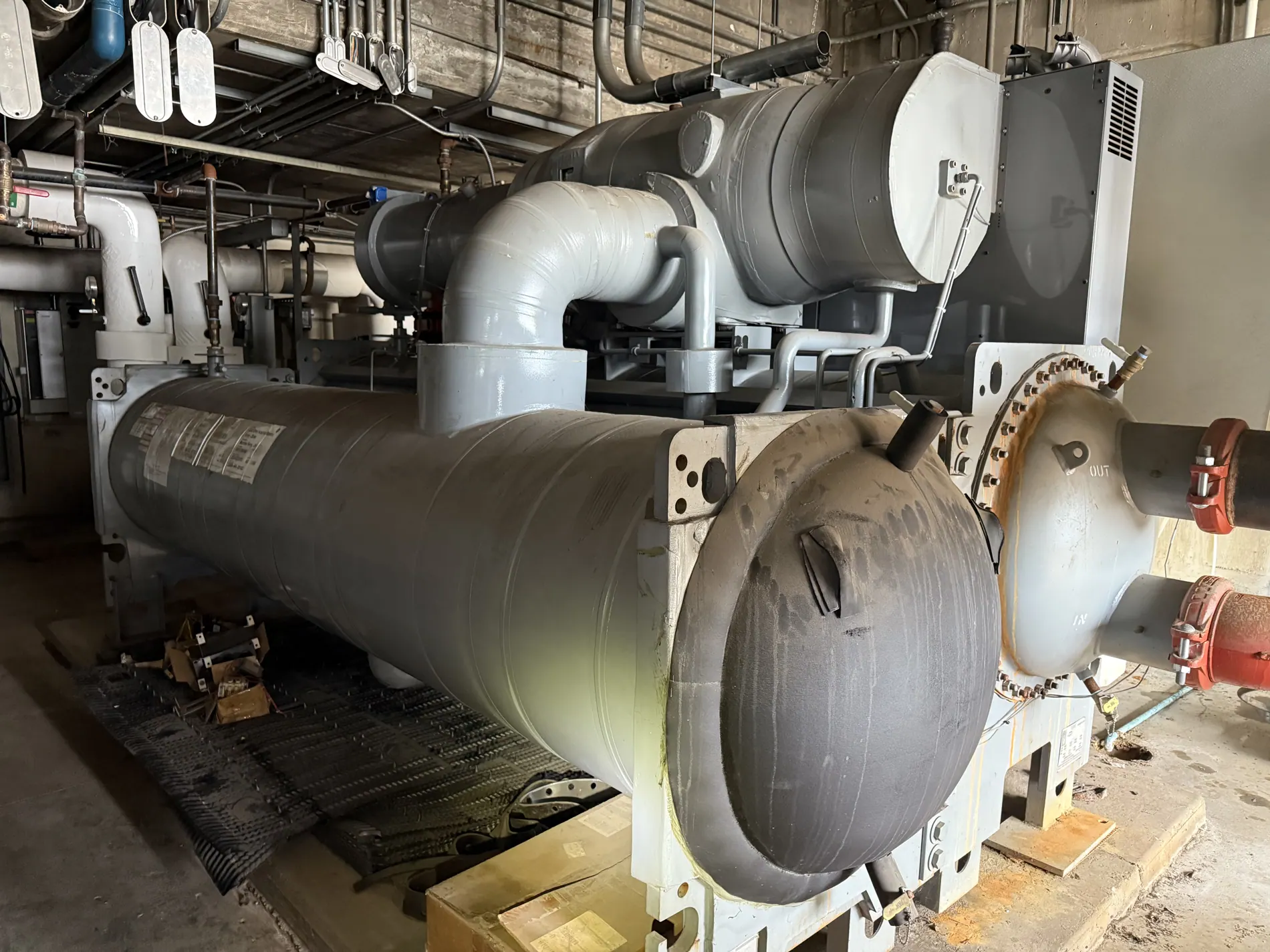
We buy centrifugal chillers in Beaumont, Texas, with cash offers and upfront payment when a purchase is agreed. We handle removal, and the seller does not need to test the equipment.
From first photo to final haul, we take care of the details so you can move forward.
Share a nameplate photo, the location, and whatever you know about your equipment. No testing is required from you.
We review the chiller and your site information, then make an offer. Payment is upfront.
We handle disconnects, refrigerant recovery, crane and rigging, loading, freight and hauling.
A surplus centrifugal chiller in Beaumont may be inside a plant room, on an exterior pad, or integrated with a larger cooling system. Each location raises different questions for purchase review and removal. We buy used centrifugal chillers, including idle or non-running units, but any offer depends on the specific equipment and the work required to collect it.
For an initial review, separate what can be seen from what is known. A photograph can show the machine’s arrangement; a nameplate may identify its model and rated capacity; service records can add history. None of these requires starting the chiller. If a label is hard to reach or unreadable, say so rather than guessing.
Take clear, wide views that establish where the chiller sits and what surrounds it. Then add closer images of the identification plate, compressor, motor, control panel, and visible connections when they can be photographed safely. These views answer different questions: the overall picture shows configuration and nearby obstacles, while close-ups help identify the equipment and its components.
A photo alone cannot confirm whether the machine operates, what remains in its refrigerant circuit, or whether a hidden connection is live. Describe those points only to the extent you know them. Do not open a refrigerant circuit, vent refrigerant, or run an idle unit to produce information for a review.
Share the manufacturer and model markings, serial number if legible, cooling capacity, and refrigerant designation shown on the equipment. Capacity is commonly stated in tons, but a cooling ton measures refrigeration capacity—not the chiller’s lifting weight. The actual weight, dimensions, and lift arrangement need separate confirmation for removal planning.
We consider chillers using different refrigerants and review the information available for the particular unit. A label records a designation; it does not establish the current charge or prove that the equipment is complete. If you have maintenance notes, an inventory record, or documents from a prior shutdown, those may help clarify the machine’s history.
Pictures of the path out should begin near the chiller and continue toward the likely loading area. Show doors, turns, stairs, overhead piping, floor transitions, and the relationship between the unit and truck access, if known. Unlike a close-up of the nameplate, a route photo helps frame the practical handling questions: available clearance, distance, obstructions, and possible crane or rigging needs.
For a Beaumont facility, report the site’s actual entry process rather than assuming a particular industrial or warehouse setup. An escort, scheduled access, a shared loading area, or limits on work hours may affect coordination if they apply. If the chiller is near operating equipment, identify the boundary of the asset being sold and what must remain undisturbed.
Tell us whether the centrifugal chiller is operating, shut down, disconnected, or of unknown status. Note visible damage, missing parts, unusual storage conditions, or any known changes to the original configuration. If corrosion or weather exposure is visible, a photograph and a brief description are more useful than a broad conclusion about the machine’s condition.
There is no need to test, repair, restart, or prepare the chiller before requesting a review. If the equipment is connected to utilities, mention what you know and which neighboring systems remain in service. We coordinate appropriate disconnects and refrigerant recovery with qualified personnel as part of an agreed removal; the seller should not attempt refrigerant handling.
A cash offer is not automatic. It depends on the asset and a review of the actual project, including the identified equipment, its apparent condition, access, handling needs, and freight. We consider used centrifugal chillers generally across a broad capacity range, including units outside common sizes, but each purchase is subject to review and agreement.
If a purchase is agreed, payment is made upfront before pickup under the terms arranged with the seller. We handle the equipment-side work, including appropriate recovery, disconnects, rigging, crane work when needed, loading, freight, and hauling. The authorized site contact supplies accurate information, access, applicable site rules, and necessary approvals.
Begin with the equipment location, readable label details, known operating status, and a small set of photographs: one showing the whole chiller, close-ups of its identifying plates, and views of the route to loading. Add any available records and note uncertainties directly. This gives us a practical basis to discuss the centrifugal chiller and, if it fits the project, review a possible purchase and removal plan.

Air-cooled or water-cooled. Centrifugal, screw or scroll. From single units to large shutdown projects, we buy industrial chillers across Texas.
Send us your chiller details and nameplate photos for a cash offer. Don’t worry if you don’t know every specification—we can start with what you have.
Call or text(614) 715-3047TEXT NAMEPLATE PHOTOS ↗Prefer email?
saleselectricalbuyers@gmail.com