
SEND THE DETAILS
Share a nameplate photo, the location, and whatever you know about your equipment. No testing is required from you.
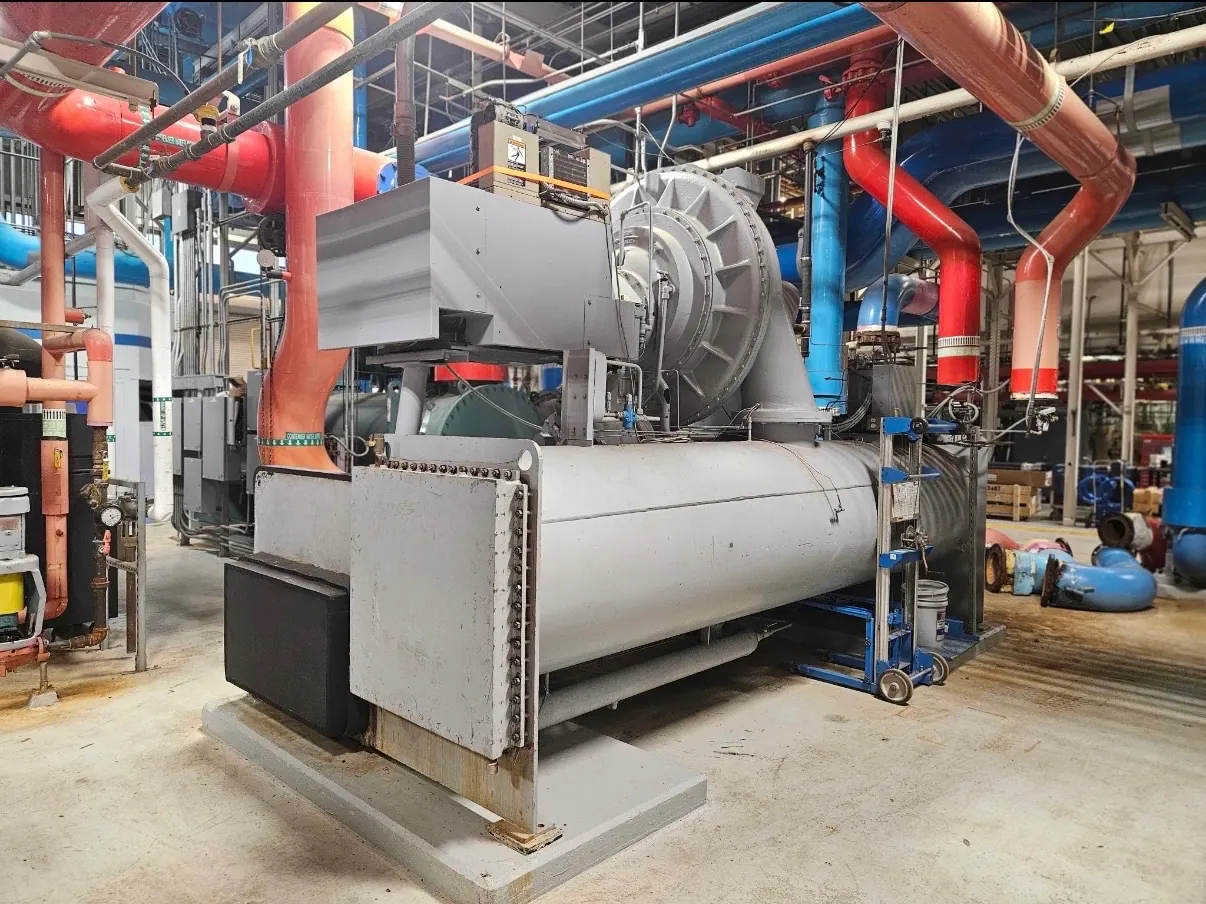
We buy chillers under 100 tons in Fort Worth, Texas, with cash offers and upfront payment when a purchase is agreed. We handle removal, and the seller does not need to test the equipment.
From first photo to final haul, we take care of the details so you can move forward.
Share a nameplate photo, the location, and whatever you know about your equipment. No testing is required from you.
We review the chiller and your site information, then make an offer. Payment is upfront.
We handle disconnects, refrigerant recovery, crane and rigging, loading, freight and hauling.
When a chiller under 100 tons becomes surplus, the first useful question is not how to move it. It is what exactly is being sold. A water-cooled or air-cooled unit may sit among pumps, piping, electrical gear, controls, or other cooling equipment that must remain. We buy used industrial and commercial chillers, including centrifugal, screw, and scroll models, subject to review of the specific asset and project.
Mark the chiller being offered and identify any accessories or components you believe belong with it. If a shared connection or nearby assembly makes the boundary unclear, describe that uncertainty rather than guessing. The sale scope can be discussed before removal is scheduled; surrounding plant equipment is not presumed included.
“Under 100 tons” refers to cooling capacity, not the machine’s weight. A compact-capacity chiller can still be heavy, awkwardly shaped, or difficult to reach. If the data plate is readable, share its capacity and model information. Overall photos, approximate dimensions, and any available weight records can help distinguish what is known from what still needs confirmation.
We consider a range of capacities and refrigerants, including equipment below 100 cooling tons. The refrigerant type, charge, and operating history may not be evident from appearance alone. Send the information already available, and note what is missing. Do not open the refrigerant circuit or vent refrigerant to identify the unit.
For an initial review, useful details include the chiller’s location on the property, whether it is indoors or outdoors, and how it can be approached. Photos taken from safe, accessible positions may show doors, overhead obstructions, nearby pipework, stairs, or the path toward a loading area. There is no need to move covers or enter a restricted space to get a better picture.
In Fort Worth, the actual facility—not the city name—determines the pickup plan. A unit in a plant room, on a roof, or beside an operating area can present different access and scheduling questions. Tell us about known restrictions, such as an appointment process, escort requirement, limited work window, or route that must stay open. The authorized site contact can confirm which rules apply.
Removal planning follows the whole route: the chiller’s position, the exit from its current area, the travel path across the site, and the place where equipment can be loaded. Door and corridor clearances, turning space, overhead utilities, ground conditions, and staging room may affect the method. Photos and measurements can help with review, but the handling approach depends on conditions verified for the job.
A crane may be needed, or a different rigging and handling arrangement may suit the installation better. Neither capacity alone nor a single photograph establishes what can be lifted safely. We coordinate the required rigging, crane work when needed, loading, freight, and hauling as part of the agreed removal scope.
Before work, the site’s authorized contact and the removal team need a clear boundary between the unit being removed and systems that must remain in service. That can matter where piping, electrical feeds, controls, or access routes are shared. Site personnel provide accurate information, authorized access, applicable site rules, and necessary approvals; the equipment work is handled by the buyer in coordination with that contact.
We arrange appropriate refrigerant recovery using qualified personnel and coordinate necessary disconnects. The seller does not need to hire a recovery crew, arrange a crane, find a hauler, or prepare the chiller by running or repairing it. If the unit’s charge, condition, or isolation status is unknown, state that plainly so the work can be planned around what is actually known.
A cash offer is based on the chiller and the proposed project after review; it is not automatic for every unit. Share its identification, capacity if available, known condition, included components, current location, and access information. Mention missing parts, modifications, or uncertainty about history rather than presenting an estimate as a verified fact. We can then discuss whether the equipment and removal scope are suitable.
If a purchase is agreed, payment is made upfront before pickup on the terms both sides confirm. The timing, sale boundary, access arrangements, and removal scope should be understood before the collection is coordinated. An offer is not a guarantee of purchase until the asset and project have been reviewed and an agreement is reached.
Gather the plate details if legible, a few safe-position photos, and a short description of where the chiller sits and how the site manages access. Include the name or role of the person authorized to coordinate the handoff. You do not need to restart, test, clean, disconnect, or repair the equipment before sharing those details. If a fact is uncertain, label it as uncertain; that makes the first review more useful and keeps planning grounded in the actual site.

Air-cooled or water-cooled. Centrifugal, screw or scroll. From single units to large shutdown projects, we buy industrial chillers across Texas.
Send us your chiller details and nameplate photos for a cash offer. Don’t worry if you don’t know every specification—we can start with what you have.
Call or text(614) 715-3047TEXT NAMEPLATE PHOTOS ↗Prefer email?
saleselectricalbuyers@gmail.com