
SEND THE DETAILS
Share a nameplate photo, the location, and whatever you know about your equipment. No testing is required from you.
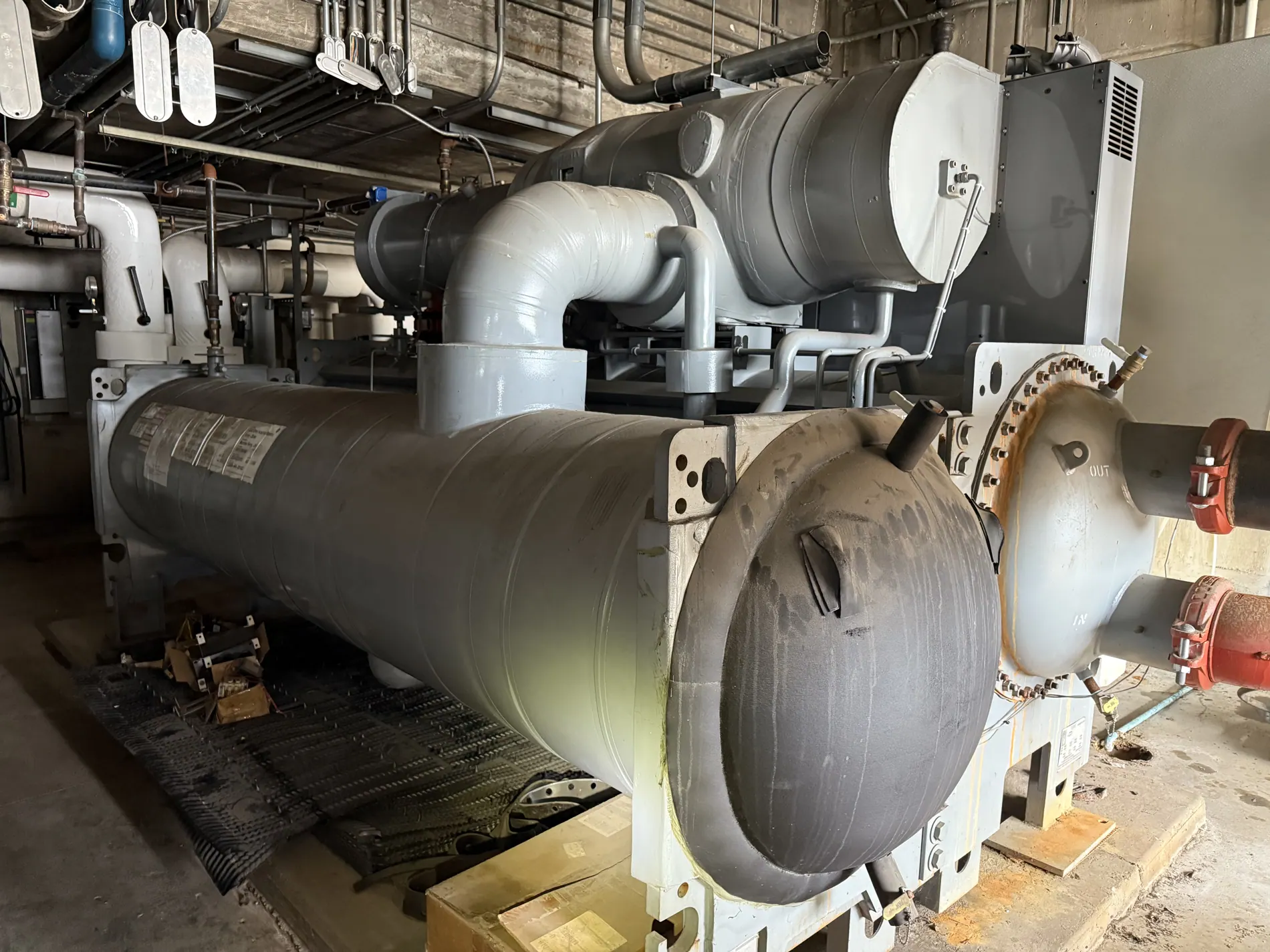
We buy Smardt chillers in Austin, Texas, with cash offers and upfront payment when a purchase is agreed. We handle removal, and the seller does not need to test the equipment.
From first photo to final haul, we take care of the details so you can move forward.
Share a nameplate photo, the location, and whatever you know about your equipment. No testing is required from you.
We review the chiller and your site information, then make an offer. Payment is upfront.
We handle disconnects, refrigerant recovery, crane and rigging, loading, freight and hauling.
A Smardt label can identify the manufacturer, but it does not answer every question that matters in a purchase review. The unit’s exact configuration, condition, refrigerant charge, service history, and removal route may not be known at the outset. Share what you can verify and mark the rest as unknown; there is no need to fill gaps with guesses.
We buy used industrial and commercial water-cooled and air-cooled chillers, including Smardt equipment, and consider centrifugal, screw, and scroll units. We consider equipment generally from 20 to 2,000+ cooling tons, across refrigerants, including idle and non-running machines. Each potential purchase is reviewed on its own merits, so an initial description is a starting point, not a promise to buy.
Take clear images from several angles if access allows. Include the full chiller, any visible nameplate, control panel, compressor or other major sections, and the area immediately around the machine. A plate photo is especially helpful when the model or serial number is readable, but a missing or damaged plate does not prevent an initial review.
Show the route a removal crew might have to use: nearby doors, overhead obstructions, stairs or lifts, tight turns, and the loading area. Photos should represent the actual route rather than just the room containing the chiller. If a route is not accessible or cannot be photographed safely, describe that instead.
Alongside photos, note what is known about the unit’s operating status, when it was last in service, and whether components are missing or visibly damaged. Mention modifications, stored parts, or equipment included with the chiller. Service records, drawings, and refrigerant information can help when available; they are not a prerequisite, and you should not open a refrigerant circuit to find out what is inside.
If the equipment is idle, disconnected, or not running, say so plainly. We do not require the seller to test, restart, repair, or demonstrate it. That avoids asking facility staff to energize an unknown system merely to support a preliminary assessment. Do not vent refrigerant or attempt recovery yourself.
Review considers more than the maker’s name or nominal capacity. The actual machine, its apparent completeness and condition, available identification, and known history all inform whether a purchase is workable. Refrigerant details may be incomplete, and current charge should not be assumed from an old record or label alone.
The removal scope matters too. A chiller in an open, accessible area may call for a different plan from one in a restricted mechanical room, on a roof, or behind operating equipment. Those are possibilities to clarify with the authorized site contact, not conditions to presume about an Austin facility. A cooling-ton rating measures capacity; it is not the chiller’s shipping weight.
Tell us where the machine sits within the property and who can approve access. Note any relevant site rules, escorts, permits, operating hours, occupied areas, delivery conflicts, or limits on staging, if they apply. Also identify utilities or adjacent equipment that must remain in service so the work boundary can be coordinated rather than guessed.
From there, the removal plan can account for disconnects, appropriate refrigerant recovery by qualified personnel, rigging, crane work when needed, loading, freight, and hauling. We arrange and handle the equipment work. The seller or site contact supplies accurate information, authorized access, applicable rules, and necessary approvals; the seller does not need to hire a separate recovery contractor, crane, or hauler for our work.
A cash offer depends on the asset and a review of the actual project, including the equipment information and removal requirements. It is not guaranteed by the brand, capacity range, or fact that a unit is surplus. If a purchase is agreed, payment is made upfront before pickup, on terms confirmed with the authorized seller. The scope should make clear which chiller and related items are included.
Before work is scheduled, the parties can confirm access, approvals, timing, and the approved route. The equipment is not treated as ready to move just because it is no longer operating; disconnects, recovery, and handling are coordinated for the actual site conditions.
To begin, gather the best nameplate and equipment photos you can, add a short note about known condition and location, and identify the person authorized to discuss site access. Send the information through the buyer’s available inquiry channel. If a detail is unknown, label it that way. A clear account of what is visible, what is documented, and what remains uncertain gives the buyer a sound basis to decide what questions or review should come next.

Air-cooled or water-cooled. Centrifugal, screw or scroll. From single units to large shutdown projects, we buy industrial chillers across Texas.
Send us your chiller details and nameplate photos for a cash offer. Don’t worry if you don’t know every specification—we can start with what you have.
Call or text(614) 715-3047TEXT NAMEPLATE PHOTOS ↗Prefer email?
saleselectricalbuyers@gmail.com