
SEND THE DETAILS
Share a nameplate photo, the location, and whatever you know about your equipment. No testing is required from you.
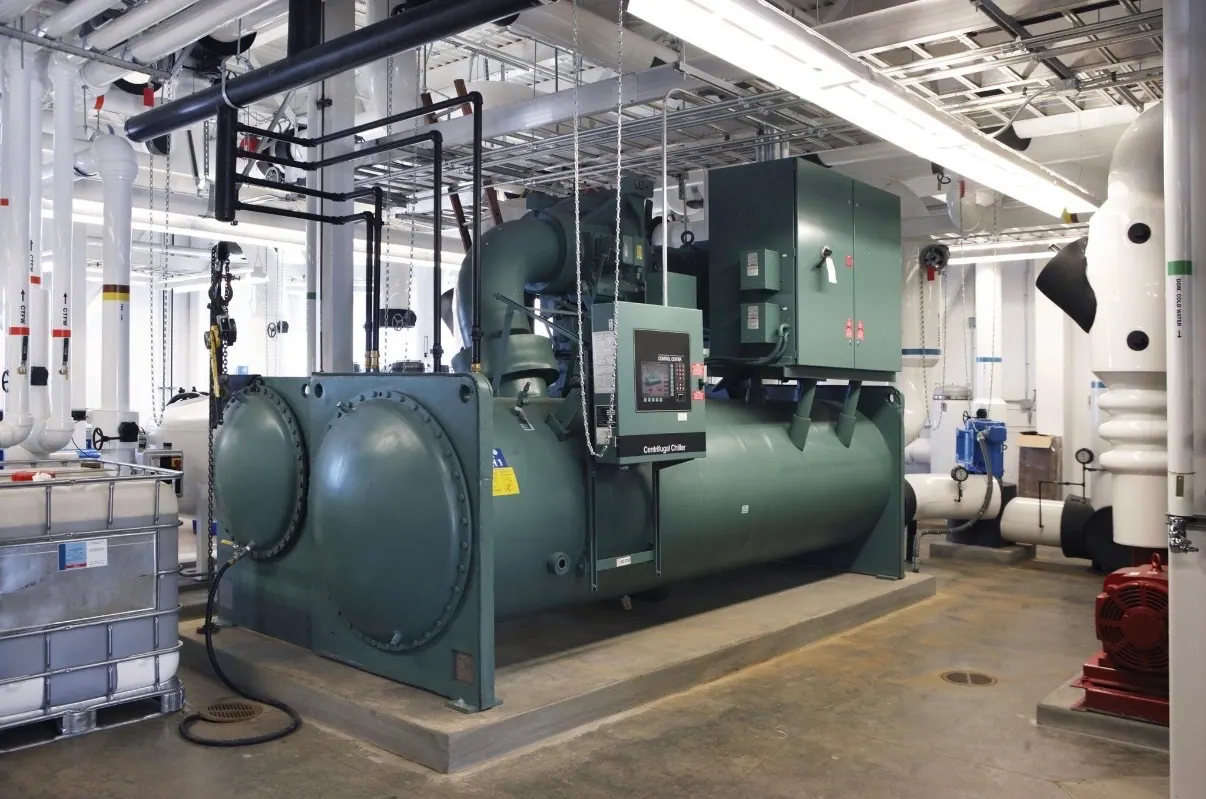
We buy chillers marked R-22 in Corpus Christi, Texas, with cash offers and upfront payment when a purchase is agreed. We handle removal, and the seller does not need to test the equipment.
From first photo to final haul, we take care of the details so you can move forward.
Share a nameplate photo, the location, and whatever you know about your equipment. No testing is required from you.
We review the chiller and your site information, then make an offer. Payment is upfront.
We handle disconnects, refrigerant recovery, crane and rigging, loading, freight and hauling.
If a chiller in Corpus Christi is marked R-22, that marking is a useful clue for an initial review—not proof of what refrigerant is in the circuit today. The machine may be idle, disconnected, altered, or simply undocumented. You do not need to restart it or open the system to begin discussing a sale.
We buy used industrial and commercial chillers, including equipment marked R-22, and consider all refrigerants. A possible purchase depends on the particular asset and a review of the project. To begin, describe where the chiller is, what its identification plate says, and what you already know about its condition and history.
A clear photo of the manufacturer’s plate and any refrigerant label can help establish the model and stated capacity. If the plate is faded or inaccessible, share the legible information you have rather than taking risks to reach it. Include records of a conversion or refrigerant change if available, and note plainly when the present charge is unknown.
Photographs from safe, accessible positions can also show the overall assembly, visible connections, and nearby clearance. Mention whether the unit appears complete, has missing panels or components, or has known damage. Old service records, project notes, and an approximate installation or removal timeline may add context, but a test run is not required.
“Not running” is enough to start a conversation; it need not be turned into a diagnosis. If you know why operation stopped, when it last ran, or whether it was drained or partially dismantled, include that information. If you do not know, say so. The review can account for uncertainty without asking you to energize the machine or arrange repairs.
A cooling ton measures capacity, not the chiller’s lifting weight. If capacity is visible on the plate, share it; do not estimate machine weight from tonnage. Available rigging documents or shipping information may help, but the removal plan must be based on the actual equipment and site.
Let us know whether the chiller is indoors, outdoors, on a roof, or within a plant area, and how it could leave its current position. Note relevant doors, corridors, stairs, loading areas, fences, overhead obstructions, or restricted zones. A few wide views can help show the route, while closer images may clarify tight turns or nearby equipment.
For a rooftop or elevated installation, mention known roof access, possible staging areas, and any site rules concerning lifts. Crane placement, ground support, clearance, weather, and lifting points require assessment for the actual location. If the unit is exposed outdoors, describe any visible corrosion or access issue without assuming what it means for removal.
On an active property, tell us which areas must stay open, when work may take place, and who can confirm access. There may be shared docks, production schedules, noise limits, delivery routes, or other constraints; identify those that apply. You do not need to design the lift or arrange a crane, rigger, or truck.
If the unit is surplus because of a plant change, identify exactly which chiller is being offered and which nearby equipment is excluded. A replacement schedule, planned shutdown, or limited access window can affect coordination. Name the authorized site representative who can confirm boundaries and approvals, especially if contractors or several departments share control of the work area.
We arrange and handle appropriate refrigerant recovery with qualified personnel, along with equipment disconnects, rigging, crane work when needed, loading, freight, and hauling. The work is coordinated with the authorized site contact. The seller or site supplies accurate information, necessary approvals, access, and applicable safety rules; the equipment work is the buyer’s responsibility if a purchase is agreed.
Do not vent refrigerant or open the circuit to prepare the chiller for review. If the current refrigerant charge is uncertain, tell us what the label and records show and what remains unknown. You do not need to hire a recovery contractor, disconnect utilities, test the unit, or restart it before asking whether it may be of interest.
When a purchase is agreed, payment is made upfront before pickup on the agreed terms. Any cash offer depends on the asset and actual project review; neither an offer nor a purchase is guaranteed. Confirm who has authority to sell, what equipment is included, and the expected access window before the removal work is scheduled.
Send a concise description of the R-22 marking, the plate information you can read, known condition, present location, and pickup constraints. Add safe photographs and relevant records if available. Clearly separate confirmed details from estimates or unknowns. That gives the equipment buyer a practical basis to review the chiller and discuss whether an offer and removal plan make sense, without asking you to run, repair, or prepare the machine.

Air-cooled or water-cooled. Centrifugal, screw or scroll. From single units to large shutdown projects, we buy industrial chillers across Texas.
Send us your chiller details and nameplate photos for a cash offer. Don’t worry if you don’t know every specification—we can start with what you have.
Call or text(614) 715-3047TEXT NAMEPLATE PHOTOS ↗Prefer email?
saleselectricalbuyers@gmail.com