
SEND THE DETAILS
Share a nameplate photo, the location, and whatever you know about your equipment. No testing is required from you.
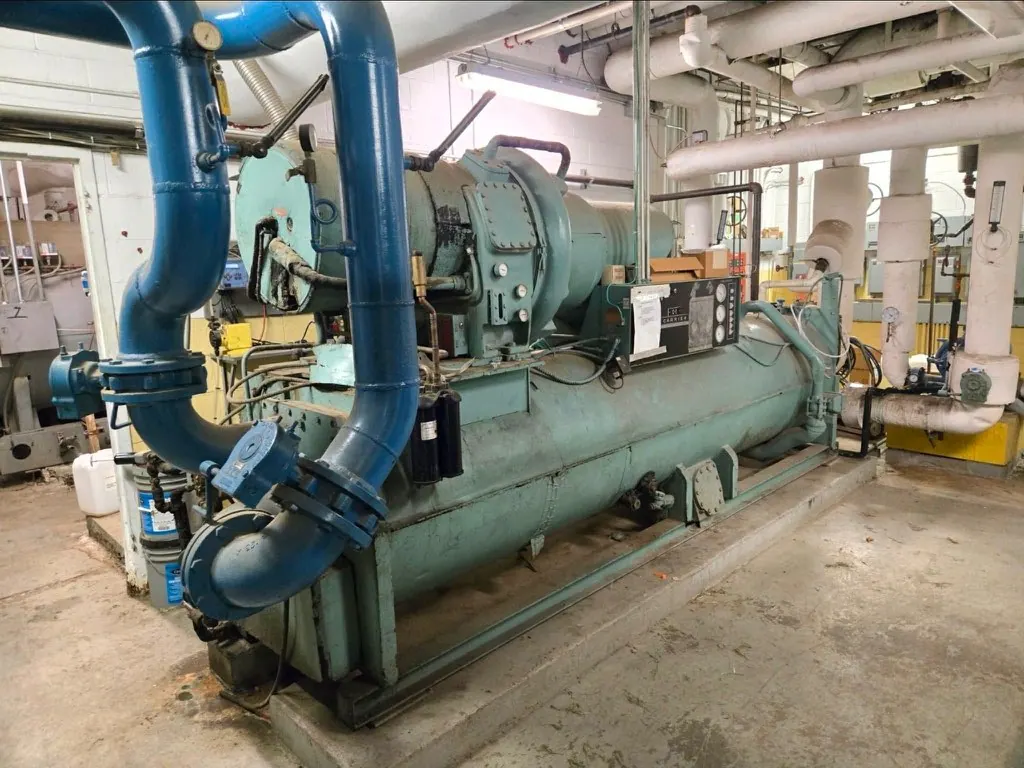
We buy Multistack chillers in Texas for projects involving non-running equipment. We offer upfront payment, handle removal, and do not require seller testing.
From first photo to final haul, we take care of the details so you can move forward.
Share a nameplate photo, the location, and whatever you know about your equipment. No testing is required from you.
We review the chiller and your site information, then make an offer. Payment is upfront.
We handle disconnects, refrigerant recovery, crane and rigging, loading, freight and hauling.
A Multistack chiller can be worth reviewing even when it will not start, has been idle for years, or has incomplete service records. A blank display or a note saying “out of service” does not explain the full condition. There may be known faults, missing components, prior repairs, or simply no recent inspection. Share what the site actually knows; there is no need to fill gaps with guesses.
We buy used industrial and commercial chillers, including Multistack equipment, and consider non-running units in Texas. Review depends on the equipment offered and the project details, not on a requirement that the chiller be operational. You do not need to test, repair, restart, or prepare a performance report to begin a discussion.
Send available nameplate information and clear photographs: a view of the overall assembly, identification plates, controls, and any sections that appear incomplete or damaged. Multistack installations can comprise modular equipment, so note which modules or components are included in the sale and which are not. If the system is part of a larger plant, distinguish the chiller from nearby equipment rather than treating the whole room as one package.
Useful details include the model or serial information you can read, approximate capacity if known, refrigerant information if recorded, and the last known operating status. Mention whether parts have been removed or whether the equipment has been disconnected. Old records can help, but current observations should be labeled as such. If the refrigerant or condition is unknown, say so; do not open the circuit to find out.
A unit that has not run recently may have unresolved electrical, control, compressor, or refrigerant-system issues. Those are possibilities, not a diagnosis. Photos and records help establish what is being considered, while an actual project review determines whether an offer can be made and what equipment and removal work it would cover. An offer is not guaranteed, and the decision is based on the particular asset and project.
We consider different chiller types and all refrigerants, including equipment whose present charge or operating history is uncertain. Do not vent refrigerant, remove components, or open refrigerant piping to improve the listing or prepare the machine for pickup. Appropriate recovery is arranged as part of the agreed work, using qualified personnel.
For a Multistack installation, the removal path may matter as much as the machine’s condition. Explain where the equipment sits and how it could move toward a loading point. If readily available, share doorway and corridor dimensions, overhead clearances, floor transitions, and photographs of turns or narrow areas. Note any known limits on access, working hours, loading areas, or equipment movement.
These details help assess whether the work may involve rigging, a crane, staged handling, or freight constraints. The right plan depends on the actual configuration and surroundings; a photograph alone cannot establish a safe lift. Cooling tons describe capacity, not shipping weight, so do not use the capacity rating as a substitute for verified handling information.
Removal can require coordination around active plant systems, occupied areas, restricted routes, or facility work rules if those apply at the property. Identify the authorized site contact and share applicable orientation, escort, permit, scheduling, and approval requirements. The facility should also define which neighboring systems must remain untouched or in service. Site isolation and permissions need to be handled with the people authorized to make those decisions.
If a purchase is agreed, we arrange and handle the equipment-side work: appropriate refrigerant recovery, disconnects, rigging, crane work when needed, loading, freight, and hauling. The seller does not need to hire a recovery contractor, crane, or hauler for this scope. The seller or site provides accurate information, authorized access, applicable rules, and necessary approvals; the work is coordinated with the designated contact.
A cash offer depends on review of the equipment and the actual removal project. Before work begins, confirm what is included, the agreed purchase terms, the pickup scope, and the site arrangements with the authorized seller. If a purchase is agreed, payment is made upfront before pickup under those agreed terms. This is a project-specific purchase discussion, not a promise that every Multistack unit will be bought.
Gather the identification details, a few representative photos, the known condition and history, and a short description of the access route. Add any uncertainty plainly rather than arranging tests or opening the machine. With that information, we can review whether the equipment and removal scope may fit and discuss what is needed next. If records are sparse, begin with what is visible and what the site contact can confirm.

Air-cooled or water-cooled. Centrifugal, screw or scroll. From single units to large shutdown projects, we buy industrial chillers across Texas.
Send us your chiller details and nameplate photos for a cash offer. Don’t worry if you don’t know every specification—we can start with what you have.
Call or text(614) 715-3047TEXT NAMEPLATE PHOTOS ↗Prefer email?
saleselectricalbuyers@gmail.com