
SEND THE DETAILS
Share a nameplate photo, the location, and whatever you know about your equipment. No testing is required from you.
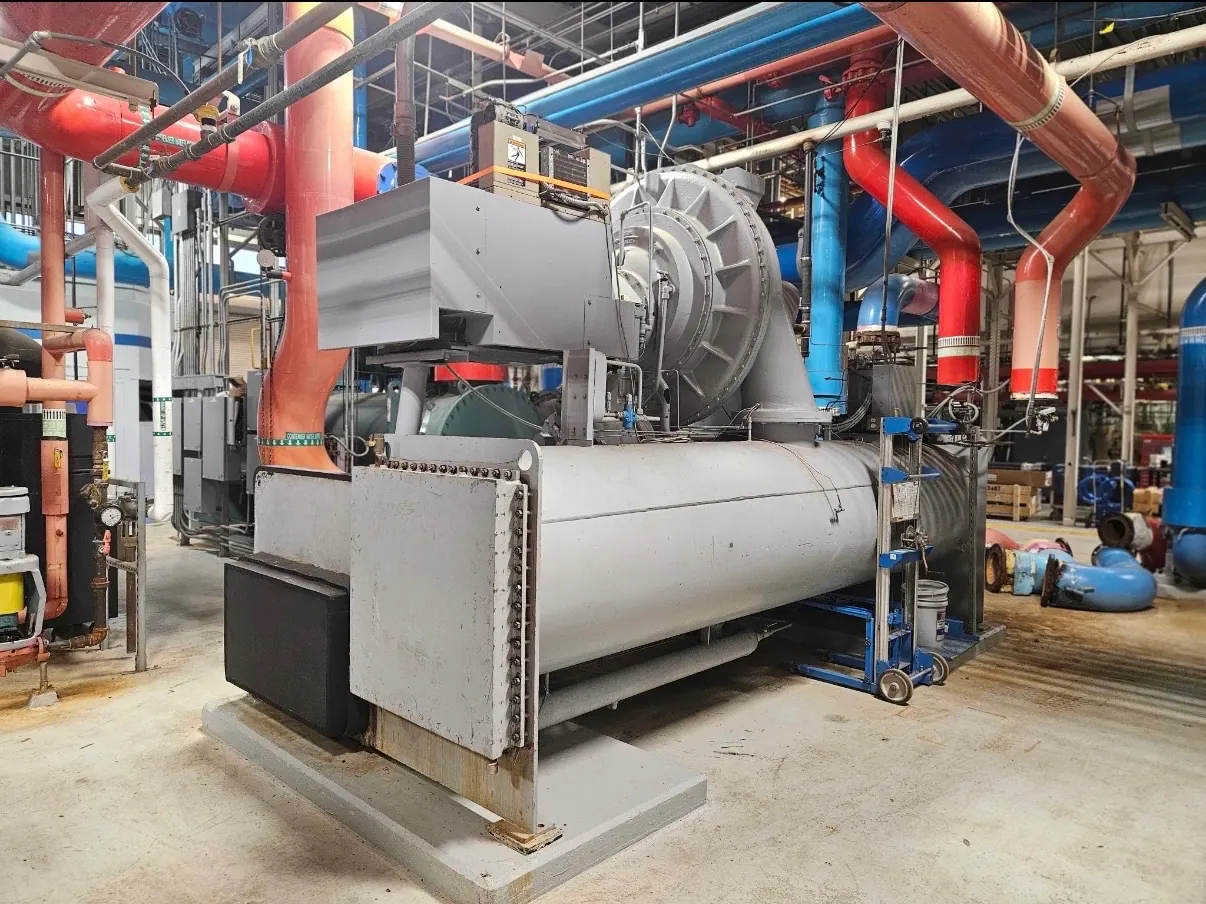
We buy Multistack chillers in Texas for projects involving cash offers. We offer upfront payment, handle removal, and do not require seller testing.
From first photo to final haul, we take care of the details so you can move forward.
Share a nameplate photo, the location, and whatever you know about your equipment. No testing is required from you.
We review the chiller and your site information, then make an offer. Payment is upfront.
We handle disconnects, refrigerant recovery, crane and rigging, loading, freight and hauling.
A Multistack label is a useful identifier, but it does not tell a buyer exactly what is being offered. A project may involve one chiller, several connected modules, controls, or only a defined portion of an installation. Spell out which pieces are included and which are staying. If the equipment is idle, incomplete, or no longer operating, say so; non-running units can still be considered.
We buy used commercial and industrial chillers, including modular equipment, across Texas. A purchase is subject to reviewing the actual asset and removal conditions. There is no standard cash amount based on the Multistack name alone, and an offer is not guaranteed before that review.
Take one or more wide views that show the chiller in relation to nearby equipment, walls, doors, and the loading route. These images help establish the physical scope: whether the offered unit appears to be a standalone assembly, part of a bank, or crowded by equipment that must remain. Avoid relying on a single close-up that hides how the machine is installed.
Then photograph the equipment itself from several sides, including visible modules, piping connections, control panels, and anything you intend to include. Clear, well-lit images can reveal configuration and apparent completeness; they do not prove operating condition, internal condition, or safe lifting points. If sections are concealed or inaccessible, note that rather than moving connected equipment to get a better picture.
Capture readable nameplates and labels on the chiller and its identifiable sections. They may help establish model and serial information, capacity, electrical details, and refrigerant type where listed. If a plate is faded, obstructed, or missing, provide the information you can read and say what is uncertain. Do not guess at a model number or treat a cooling-ton rating as the machine’s weight.
Share any available inventory or service records if they help distinguish the equipment or document known changes. These can supplement photos and labels, but they are not a substitute for describing what is physically present today. Mention known missing components, damage, prior removal of modules, or a history of the chiller being stored or non-operational. No test run, repair, restart, or refrigerant-circuit work is needed to request a review.
Route information answers a different question from equipment photos: can the agreed scope be accessed and removed under the site’s actual conditions? Explain where the chiller sits, how a crew and equipment would reach it, and where loading could take place. If the route includes doors, turns, stairs, a shared dock, controlled gates, or limited work hours, identify those details when applicable.
Useful route photos might show a doorway or corridor at its narrowest point, changes in floor level, overhead obstructions, the outdoor path, and the proposed truck or crane position. Include a sense of scale or measured clearances when available, but do not estimate the machine’s weight from appearance. A site contact can confirm dimensions and access rules. The actual lift and transport plan must be based on verified conditions and qualified handling, not photographs alone.
If the chiller is beside equipment that remains in service, mark the boundary between the sale and the property that must stay untouched. Mention any operating restrictions, permits, escorts, appointments, or approved work windows that apply. A university, industrial plant, or other controlled property may have its own access and scheduling procedures; the relevant details depend on the particular site.
The authorized site contact should provide accurate information, arrange permitted access, explain site rules, and secure necessary approvals. We coordinate the equipment work with that contact. If a crane or other specialized handling is needed, the removal plan depends on the actual clearances and approved setup area.
Do not vent refrigerant or open the chiller’s circuit. Current charge and configuration may not be known from a label or photograph. If a purchase is agreed, we coordinate appropriate refrigerant recovery with qualified personnel, along with disconnects, rigging, crane work when needed, loading, freight, and hauling. The seller is not required to arrange a separate recovery contractor or hauler, or to prepare the machine by testing or repairing it.
Before a handoff, the parties confirm which equipment is being sold, the purchase terms, and the coordinated pickup scope. A cash offer depends on the asset and the project review; it is not a promised amount. If a purchase is agreed, payment is made upfront before pickup, on the terms agreed with the authorized seller.
To begin, gather the clearest available label photos, wide and close equipment views, a short description of what is included and what is known about its condition, and practical route details. Identify who can authorize the sale and answer site-access questions. You do not need to restart the chiller or prepare a lift plan yourself; provide the facts you have so the equipment and removal requirements can be reviewed.

Air-cooled or water-cooled. Centrifugal, screw or scroll. From single units to large shutdown projects, we buy industrial chillers across Texas.
Send us your chiller details and nameplate photos for a cash offer. Don’t worry if you don’t know every specification—we can start with what you have.
Call or text(614) 715-3047TEXT NAMEPLATE PHOTOS ↗Prefer email?
saleselectricalbuyers@gmail.com