
SEND THE DETAILS
Share a nameplate photo, the location, and whatever you know about your equipment. No testing is required from you.
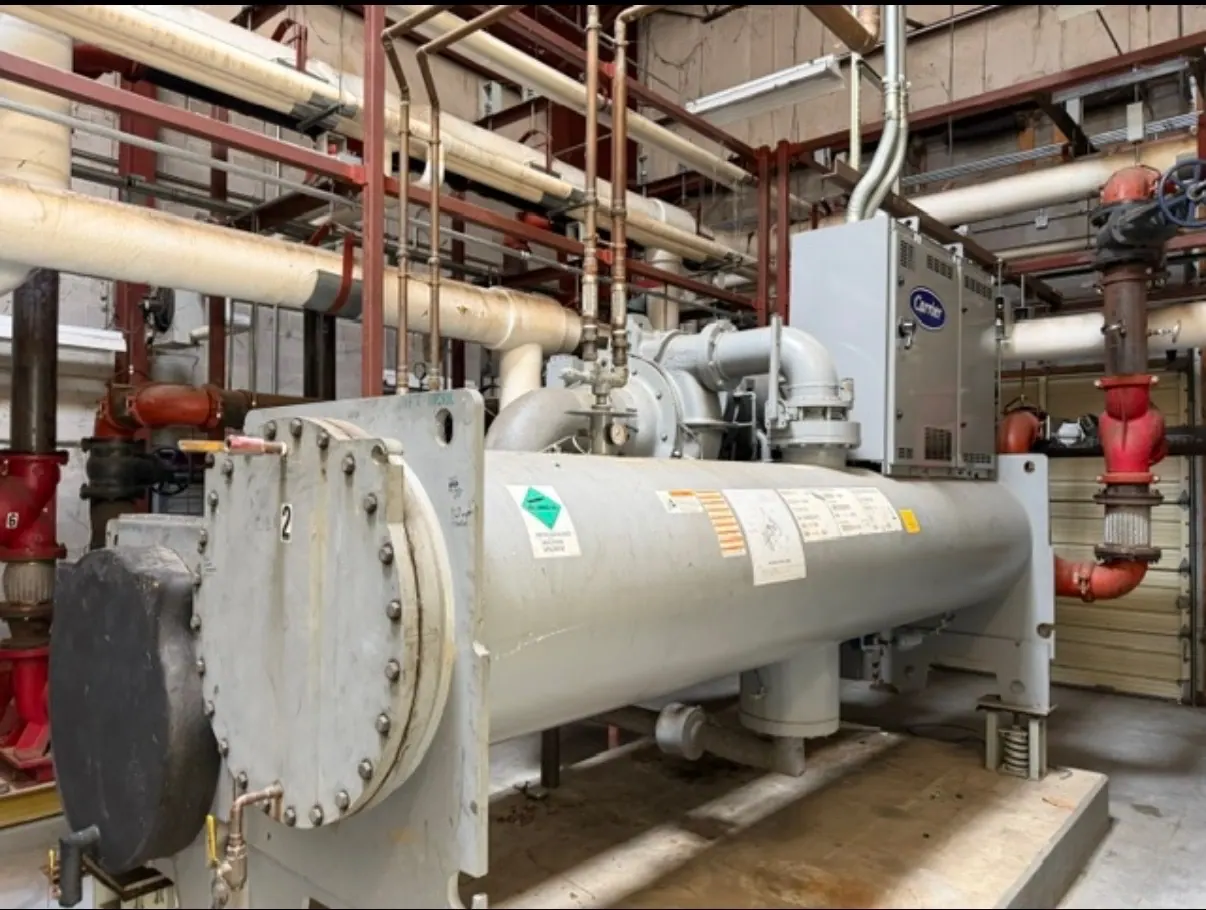
We buy chillers in mechanical rooms in El Paso, Texas, with cash offers and upfront payment when a purchase is agreed. We handle removal, and the seller does not need to test the equipment.
From first photo to final haul, we take care of the details so you can move forward.
Share a nameplate photo, the location, and whatever you know about your equipment. No testing is required from you.
We review the chiller and your site information, then make an offer. Payment is upfront.
We handle disconnects, refrigerant recovery, crane and rigging, loading, freight and hauling.
A chiller in a mechanical room may have an incomplete service file, an unreadable nameplate, or years of uncertain operating history. That does not automatically rule it out for review. We buy used industrial and commercial water-cooled and air-cooled chillers, including centrifugal, screw, and scroll units, and consider idle or non-running equipment and all refrigerants. The machine’s actual identity, condition, and removal setting still matter to an offer.
Share what you can verify, and mark estimates or unknowns plainly. Useful details include the manufacturer and model if legible, serial number, rated capacity, refrigerant shown on the plate, and whether the chiller is installed, isolated, or already disconnected. A cooling ton describes capacity; it does not tell us the machine’s weight. No one needs to restart the unit or open its refrigerant circuit to fill gaps in the records.
A clear nameplate image, a full-machine view, and a few photographs of the room can provide a practical starting point. Include the chiller’s connections and nearby equipment where visible, without removing panels or entering a restricted area. If labels are faded, send the best available image rather than guessing at the refrigerant or model.
For a possible El Paso removal, also show the route from the machine to the exterior or loading point. Door openings, corridor turns, steps, low overheads, and changes in floor level can affect how a large assembly is handled. If dimensions are readily available, include them; otherwise, say they have not been measured. Do not move stored materials or dismantle building components just to prepare an inquiry.
Mechanical-room access is often the defining part of a removal plan, but the route must be assessed at the actual property. A chiller may need to pass through service doors, travel along a shared corridor, or be lifted through an opening. Whether rigging, a crane, or another method is appropriate depends on the unit, available clearances, lifting points, structural limits, and site conditions—not on tonnage alone.
Tell us about known restrictions: occupied spaces, operating equipment nearby, access hours, security check-in, loading areas, or building approvals. If the room is below grade or the chiller is surrounded by piping and electrical services, mention that when known. These details help frame the scope; they are not a request for the seller to survey the building or arrange a lift.
The person offering the chiller should have authority to sell it, and the site contact should be authorized to coordinate access. Identify what is included in the sale and what must remain, particularly where several machines, pumps, controls, or loose components share the room. If a property transfer or project deadline affects timing, explain the requested window; the pickup date still needs to be agreed.
Before work, the authorized site representative can explain site rules, required approvals, access limits, and any services that must remain undisturbed. We coordinate the chiller work with that contact. Conditions may vary between facilities, so the route, work area, and schedule should be confirmed for the specific property rather than assumed from photographs alone.
If a purchase is agreed, we arrange and handle appropriate refrigerant recovery with qualified personnel, disconnects, rigging, crane work when needed, loading, freight, and hauling. The sequence is coordinated with the authorized site contact and the approved work area. The seller does not need to test, repair, restart, disconnect, or hire a recovery contractor, crane company, or hauler first.
Do not vent refrigerant or open the circuit to identify what remains in it. The current charge may be unknown, especially when records are incomplete or the machine has been idle. Report any available service information and let the removal plan address safe handling. Accurate descriptions of connected services and site rules are more useful than attempting preparatory work without authorization.
A cash offer depends on the asset and a review of the actual project, including known condition, equipment configuration, access, and removal requirements. It is not guaranteed, and not every unit is necessarily a fit. If we agree to purchase, payment is made upfront before pickup on the agreed terms; the scope and timing should be clear before the equipment work begins.
To start, gather the identification plate if available, a few overall and access-route photographs, the best known condition and refrigerant information, and the name of the authorized site contact. A concise note about what is known—and what is not—helps us assess the chiller without asking you to create records that do not exist. We can then review the equipment and removal setting and explain what information is needed for the next step.

Air-cooled or water-cooled. Centrifugal, screw or scroll. From single units to large shutdown projects, we buy industrial chillers across Texas.
Send us your chiller details and nameplate photos for a cash offer. Don’t worry if you don’t know every specification—we can start with what you have.
Call or text(614) 715-3047TEXT NAMEPLATE PHOTOS ↗Prefer email?
saleselectricalbuyers@gmail.com