
SEND THE DETAILS
Share a nameplate photo, the location, and whatever you know about your equipment. No testing is required from you.
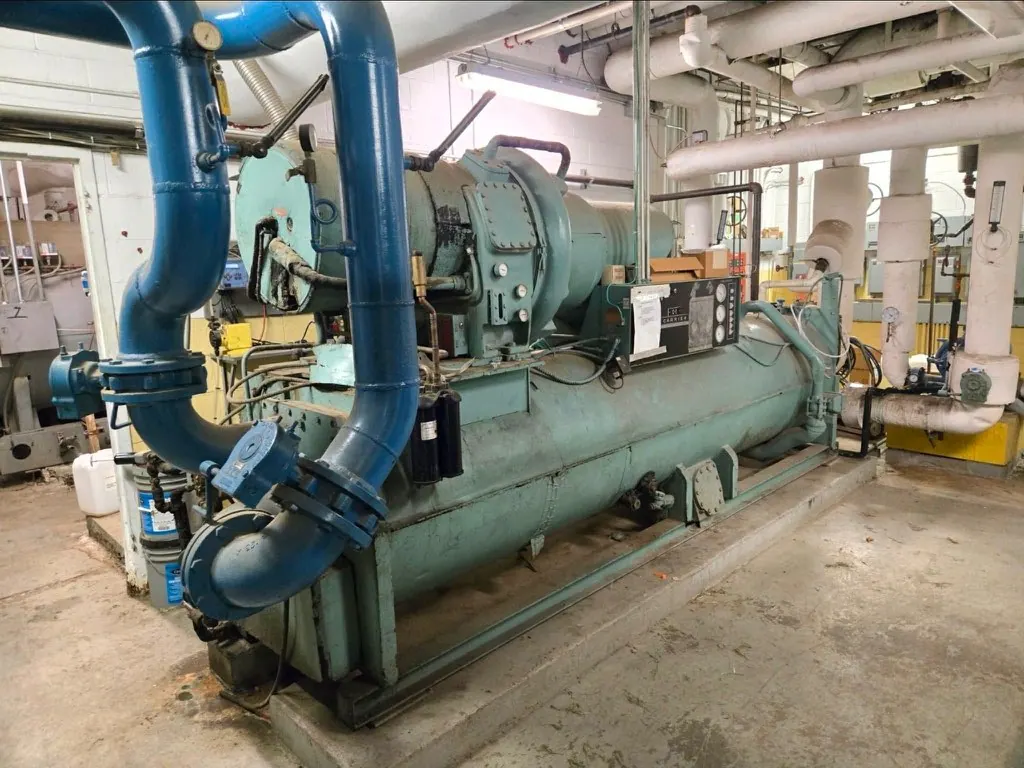
We buy hotel chillers in San Antonio, Texas, with cash offers and upfront payment when a purchase is agreed. We handle removal, and the seller does not need to test the equipment.
From first photo to final haul, we take care of the details so you can move forward.
Share a nameplate photo, the location, and whatever you know about your equipment. No testing is required from you.
We review the chiller and your site information, then make an offer. Payment is upfront.
We handle disconnects, refrigerant recovery, crane and rigging, loading, freight and hauling.
A hotel chiller can become surplus during a plant replacement, a change in building use, or a wider facilities project. The reason for removal helps explain timing, but it does not establish the machine’s condition. For an initial review, share what is known and mark anything uncertain. We buy used hotel chillers in San Antonio and consider water-cooled and air-cooled equipment, including centrifugal, screw, and scroll units. We consider all refrigerants and review idle or non-running equipment as well.
There is no need to restart a unit to make it eligible for review. If it has been out of service, note that and describe any known history, such as when it was last operated or why it was taken offline. If the cause is unclear, say so rather than diagnosing it. We do not ask you to test the chiller, repair it, open its refrigerant circuit, or arrange refrigerant work before discussing a possible purchase.
Clear images often answer practical questions faster than a long equipment description. Start with a full view of each chiller, then photograph the manufacturer’s identification plate so its text is legible. Include the control panel and visible connections if they can be photographed safely without removing covers. A wider view showing the unit’s position in the plant room or on the roof helps place those details in context.
Access images matter too. If convenient, show the route from the equipment to an exit or loading point: doors, turns, stairs, ramps, overhead obstructions, and any changes in floor level. A hotel may need to keep guest areas, service corridors, loading zones, or other work areas available for normal operations. Describe restrictions that actually apply, such as approved work hours, escort requirements, reservations, or areas that must remain clear. Do not enter restricted spaces or move barriers just to take a picture.
Along with photos, provide the equipment location within the property, the number of units under consideration, and any model or capacity information you can read. A cooling ton is a measure of capacity, not the chiller’s weight. Do not estimate lifting weight from tonnage; if verified equipment weight or drawings are available, they may help with planning.
It is useful to identify who owns the equipment, who is authorized to approve its sale, and which facilities representative can coordinate access. Mention whether a replacement project has a target handoff date, but distinguish a firm schedule from a tentative one. Unknown refrigerant charge, operating condition, dimensions, or removal route should be identified plainly. Accurate uncertainty is more helpful than a confident guess.
The review considers the chiller itself and the work needed to remove it. Equipment type, identification, known condition, location, available access, and the likely handling scope can all matter. A unit in a constrained plant room may require a different removal plan from one with an open route. Whether a crane, specialized rigging, or other equipment is appropriate depends on the actual configuration and site.
A cash offer is based on the asset and review of the actual project; it is not guaranteed. An initial discussion does not commit either side to a purchase. If an offer is accepted and the purchase is agreed, payment is made upfront before pickup under the agreed terms. Confirm the equipment included, sale authorization, payment arrangement, and access window before work is scheduled.
If a purchase proceeds, we arrange and handle appropriate refrigerant recovery with qualified personnel, equipment disconnects, rigging, crane work when needed, loading, freight, and hauling. The seller does not need to hire a recovery contractor, crane, or hauler, or to disconnect or move the chiller. Equipment work is the buyer’s responsibility and is coordinated with the authorized site contact.
The property or seller supplies accurate information, authorized access, applicable site rules, and necessary approvals. Depending on the actual hotel and removal route, planning may need to account for security procedures, occupied areas, delivery traffic, noise limits, or a narrow work window. These details are not presumed; the site contact can identify what applies. Do not vent refrigerant or open the circuit. Recovery and disconnection are handled through the arranged work.
Send the identification plate and overview photos, the unit’s location, what you know about its condition, and any relevant access or schedule constraints. Include the name of an authorized seller or facilities contact who can clarify the project. If a detail is unavailable, say that directly. We can review the information and discuss whether the equipment and removal scope merit a purchase offer without asking you to test, repair, clean, or restart the chiller first.

Air-cooled or water-cooled. Centrifugal, screw or scroll. From single units to large shutdown projects, we buy industrial chillers across Texas.
Send us your chiller details and nameplate photos for a cash offer. Don’t worry if you don’t know every specification—we can start with what you have.
Call or text(614) 715-3047TEXT NAMEPLATE PHOTOS ↗Prefer email?
saleselectricalbuyers@gmail.com